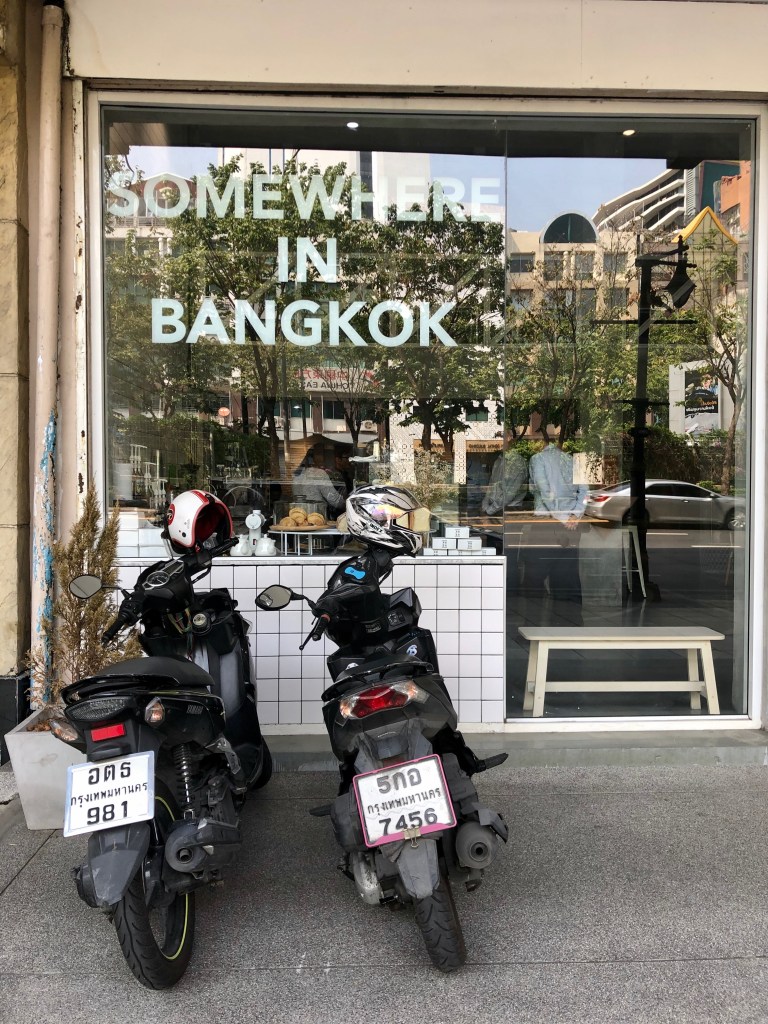
January 15th & 16th (Jordan & Fedora)

January 15th – Beach Day

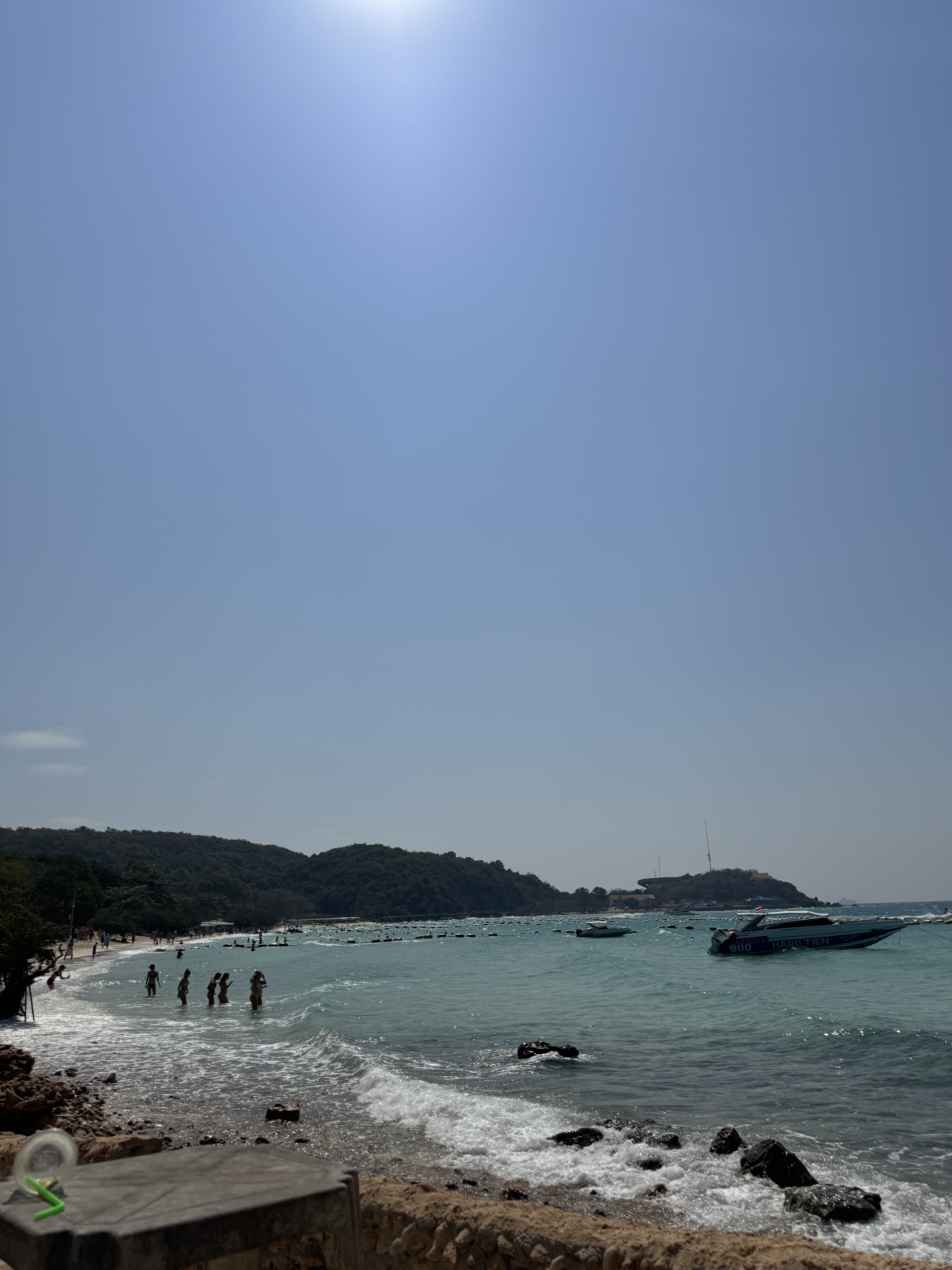
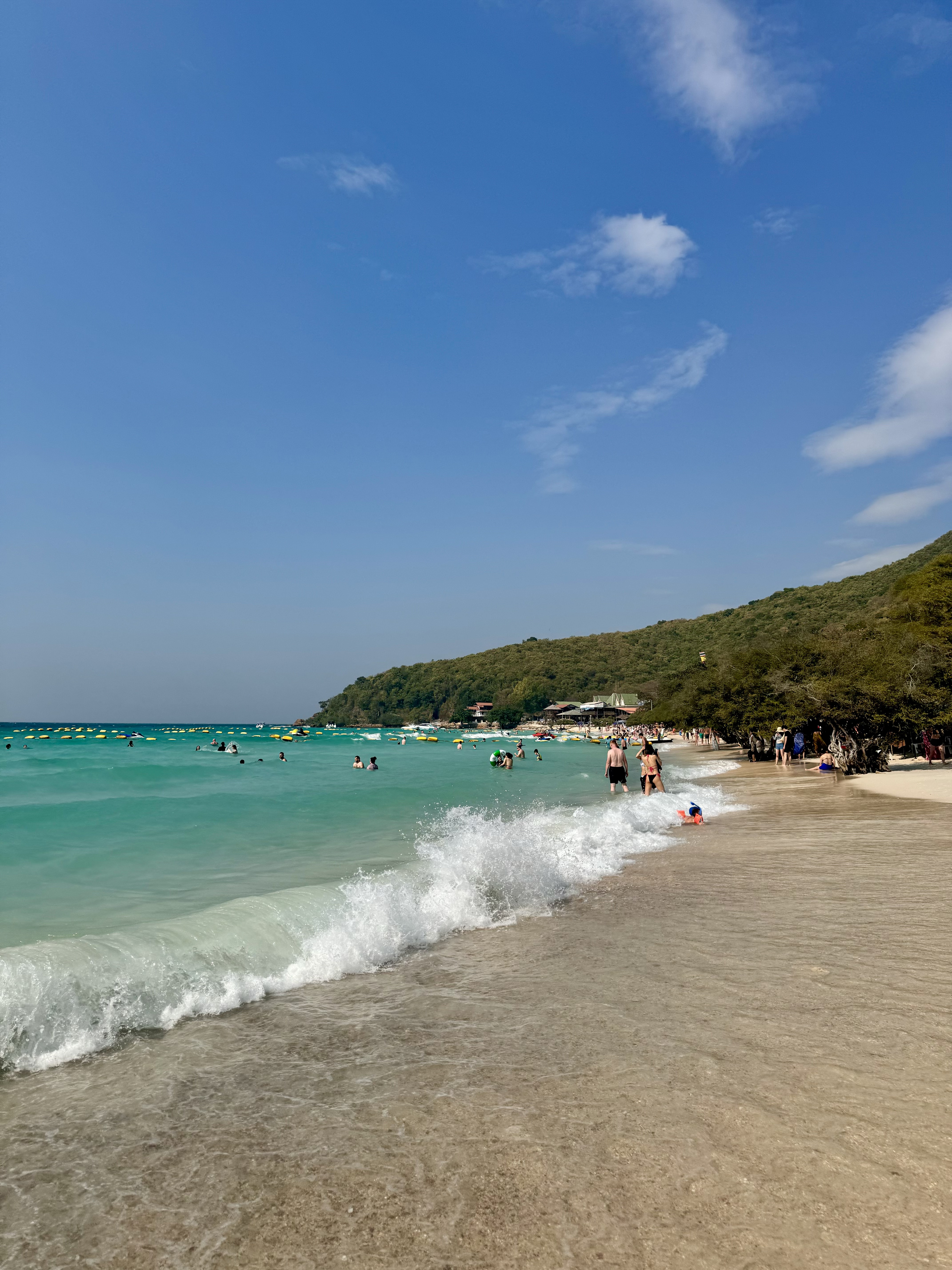
Today, our group drove three hours to explore the beach town known as Pattaya and Koh Larn Island. The day started with breakfast at the hotel, and then we got on the bus to start our travels. Once we arrived at the beach town known as Pattaya, we immediately hopped on a thirty-minute-long ferry ride to the island. The ride was far from enjoyable as we were getting thrown off our seats and soaked from head to toe from the splashes of the waves.

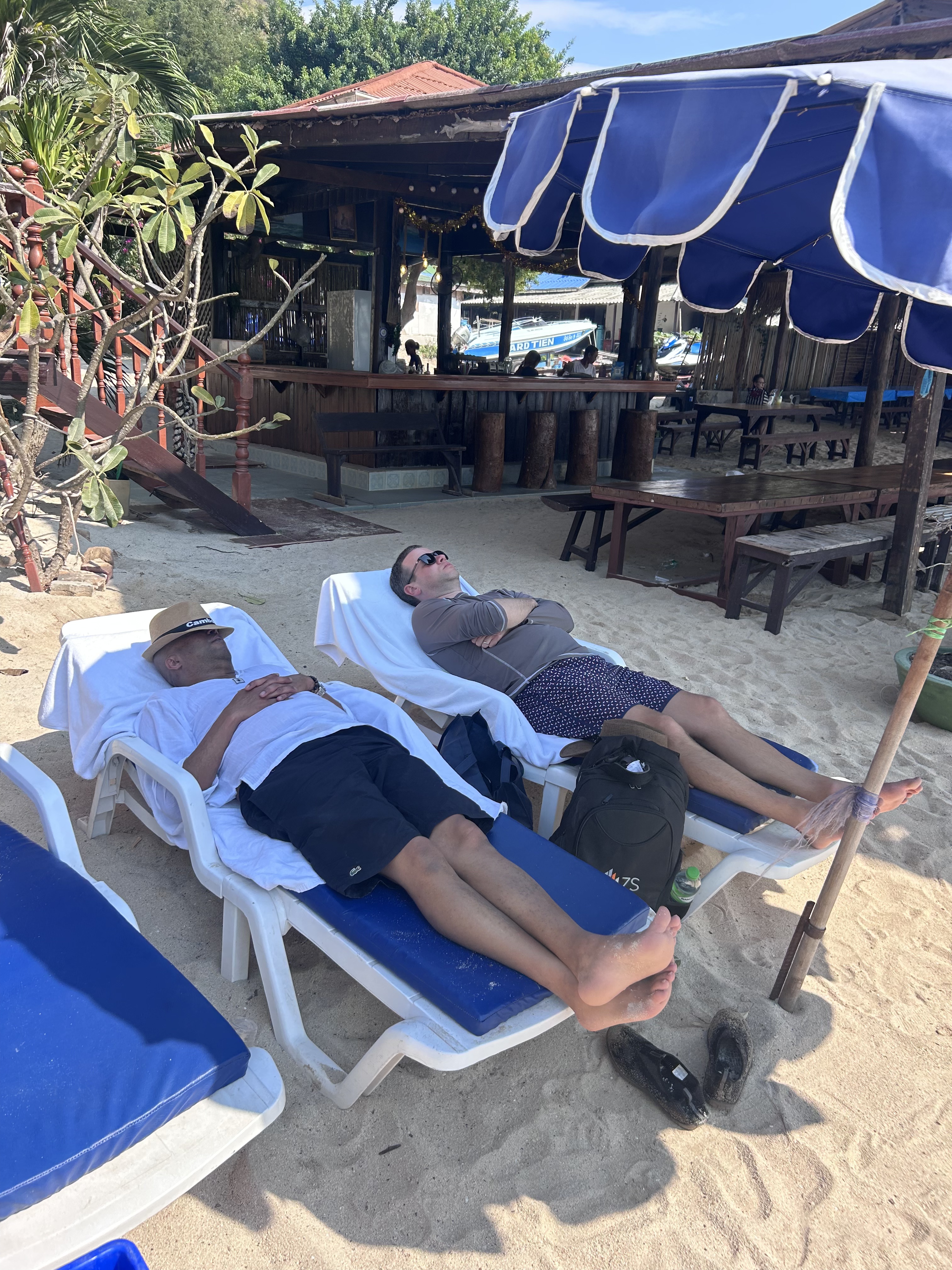
After getting demolished on the boat, we anchored ourselves in the sand, and the driver helped everyone get off one by one. The beach was not too crowded since we arrived in the early afternoon, but it started filling up later. The beaches were lined with vibrant beach chairs, and various restaurants were scattered along the water for people to get drinks and lunch. There were locals selling coconuts and offering to take people on jet skis if they paid with cash.

I spent the afternoon tanning, listening to reggae music, sipping some beverages, and enjoying the perfectly blue ocean. Around 1 PM, our group had Thai for lunch, and everyone was given a fresh coconut to drink with their meals.

Later in the day, Fedora and Andrew gathered some cash and paid to ride on the jet skis for thirty minutes while the rest of us relaxed on our chairs. The day was very relaxing and peaceful—something we haven’t been able to do during this trip with all of the city tours.

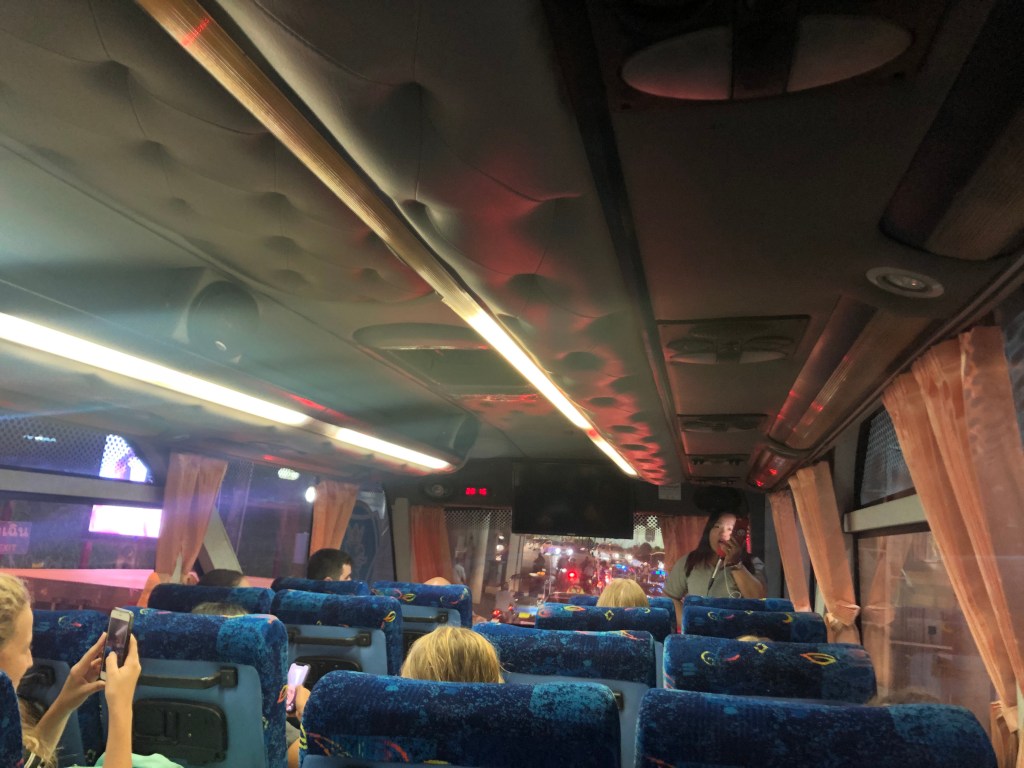
Around 4 PM, we left the beach and took the ferry back to Pattaya. Everyone was ready to go on the bus and leave, so we didn’t have time to explore the beach town, although we did a short drive-by and watched the lively town at night on our way out. Koh Larn and Pattaya offered the perfect blend of adventure and relaxation, making for a day I won’t forget from this trip!
January 16th – Bangkok University

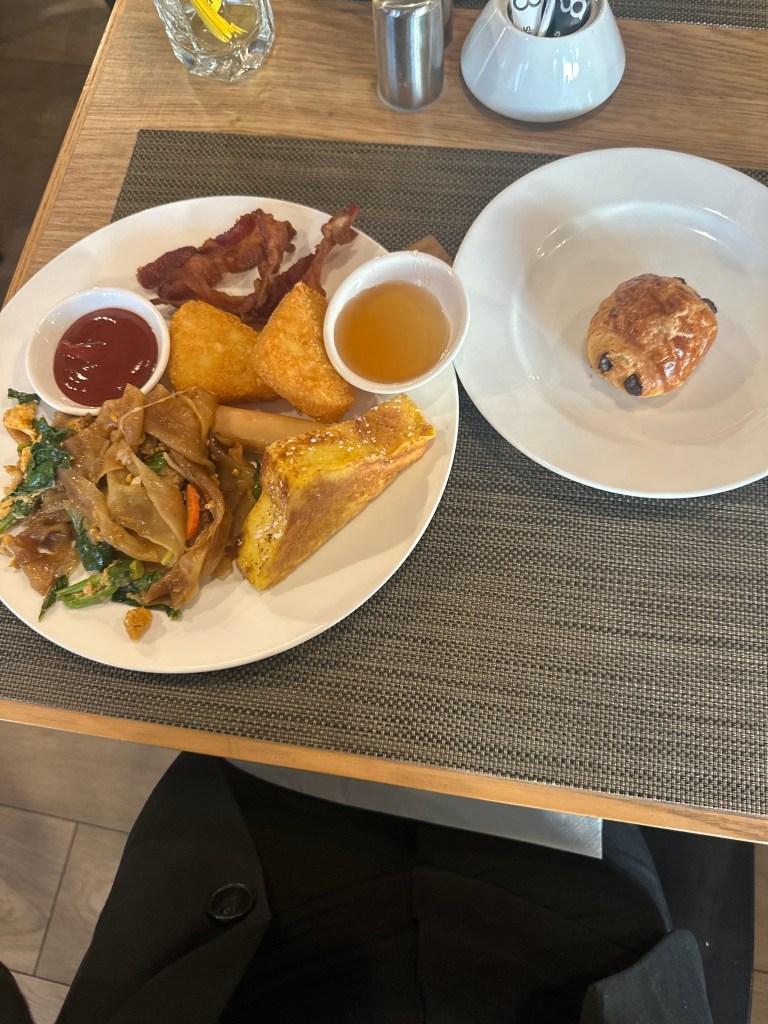
The day started with a battle at breakfast—turns out a million other people had the same idea of eating at the hotel buffet. Pro tip: wear your business professional outfit to breakfast and instantly feel like you own the place. We strutted in like bosses, coffee in one hand, croissant in the other. 
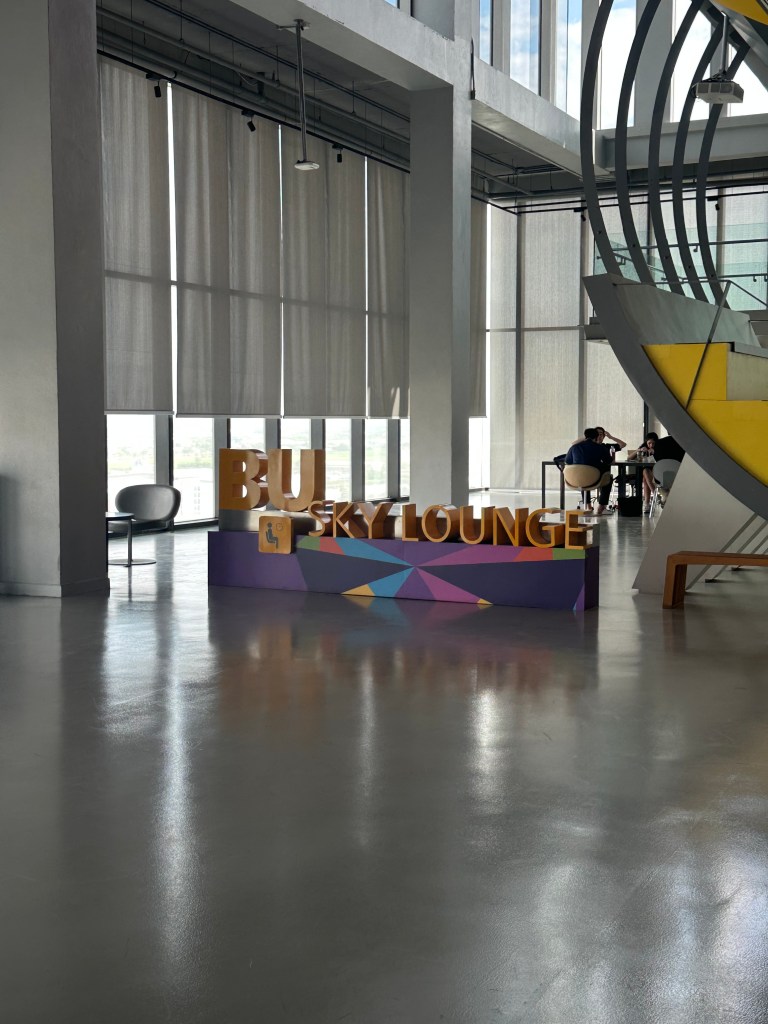
After conquering breakfast, we hopped on a bus for a 40-minute ride to Bangkok University. Huge shoutout to Raj, the MVP, for making this visit happen. If he hadn’t gone to grad school at UConn and made friends with Sansanee, we’d probably be stuck Googling “cool things to do in Bangkok” right now. Raj taught us the real power of networking. 
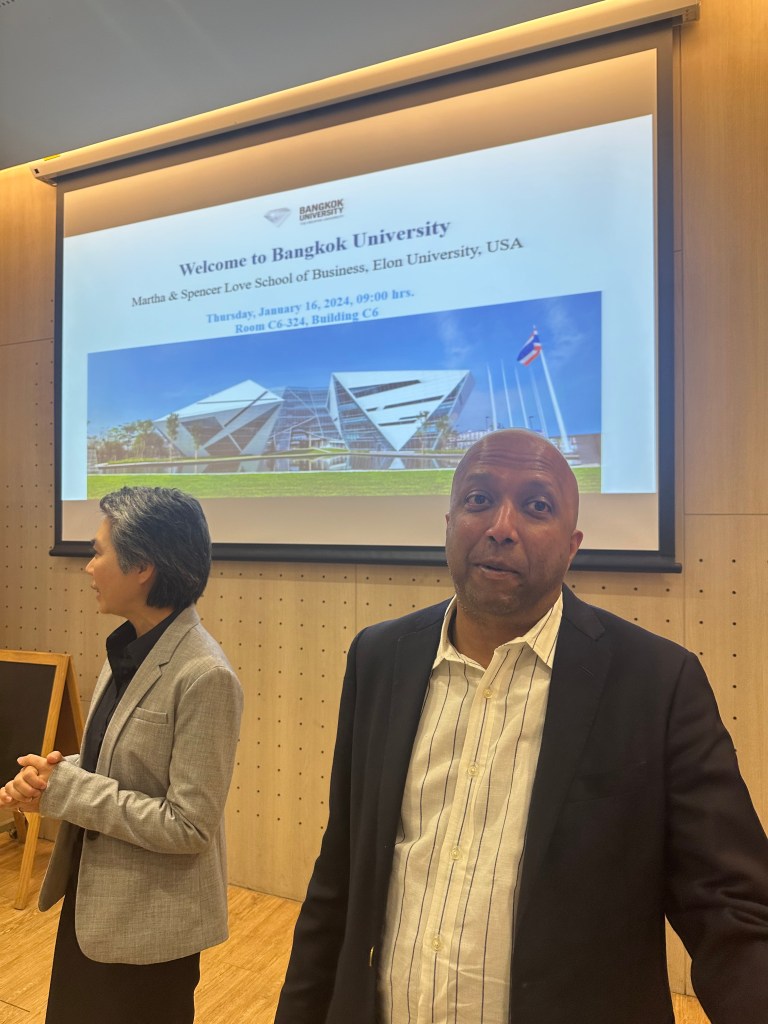
The visit kicked off with an informational presentation about the university and a crash course in the cultural differences between Thailand and the U.S. Then we went to their museum, which showcased artifacts like pottery and ceramics—basically, ancient bowls and plates.

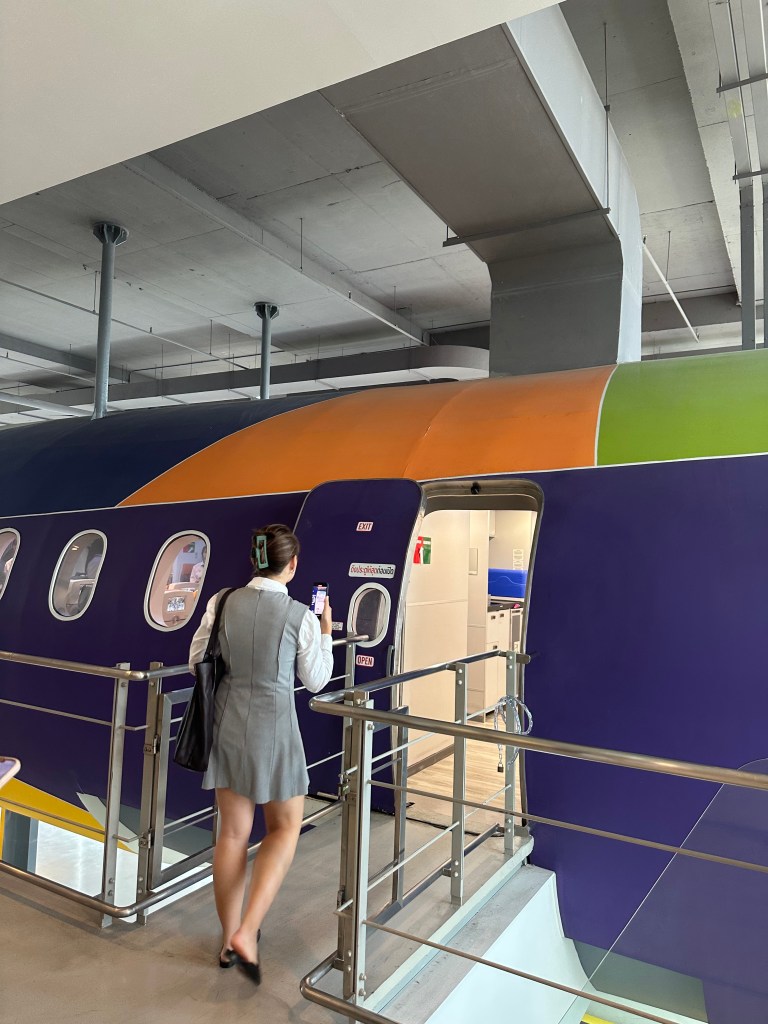
Next, we jumped on their campus trolley, and things got wild at the tourism building. First stop? The “flight floor,” complete with a mock airplane where students practice becoming flight attendants. It was so realistic, we were ready to order peanuts and a Coke.  Below that, they had a replica airport check-in and security area.
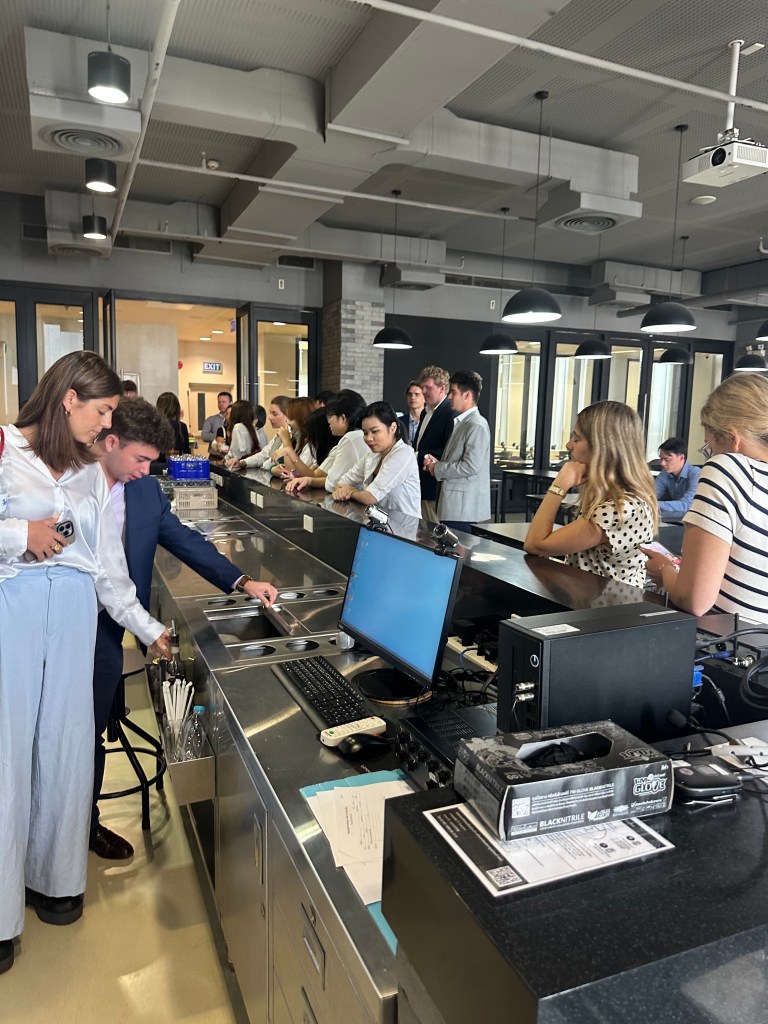
Then came the “bar floor.” Yup, an actual bar and kitchen where students learn to bartend. Why doesnt Elon have this?! And finally, we ended at the “rooms” floor, where we saw how to perfectly set up a hotel room. 
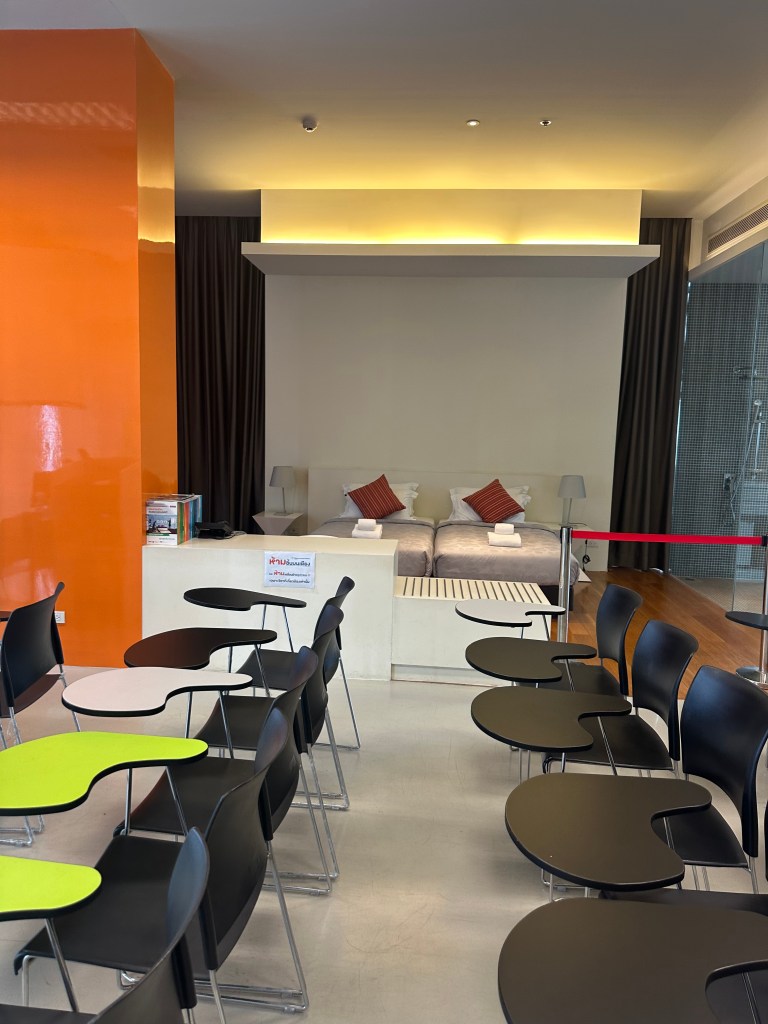
The tour was amazing, but now we’ve got the rest of the day free. Bangkok nightlife, here we come! 

Iconic Sites from Singapore- Tang Dynasty Junk, Merlion, Botanical Garden, Gardens by the Bay

Firstly we started the day at the Asian Civilization Museum. Here we got to explore historical aristocrats, relics, and witness the beauty within history. This museum consisted of three floors with various rooms. The first floor consisted of Trade and Maritime Silk Routes Galleries. On this floor we explored Singapore archaeology, maritime trade, and tang shipwreck. We also observed contemporary art that encompassed the history behind Singapore. The second floor consisted of Faith and Belief Galleries. These galleries consisted of Islamic Art, Ancient Religions, Ancestors and Rituals, and Christian Art. I particularly spent majority of my time on this floor in the Christian Art sector. From painting, murals, and statues, the artwork in this section was truly moving. This floor also contained rare historical books and manuscripts. Lastly, the third floor focused on materials and designs. From ceramics, fashion, textiles, and jewelry, this floor highlighted the beauty behind extravagant patterns and dimensions.

The really awesome part about this museum was the fact that it was all found from the Tang Dynasty Junk ship. All of these artifacts survived the ship wreck. Shirley (our fabulous tour guide) said that this was the most artifacts in the world that survived any ship wreck. This made it a lot more intriguing for Jack and I, along with the others in our group.

Our favorite part of the whole museum was the Tree of Life. The Tree of Life is an ancient symbol used by cultures around the world. In this context, the Tree of Life serves as a visual representation of lineage, displaying the connections and relationships between ancestors, parents, and descendants. The family tree in the museum took inspiration from that of mestizo communities, which developed as a result of the Manila galleon trade. Mestizo was originally a term for people with one Spanish and one non-Spanish parent. Today it is used to refer to anyone of mixed heritage.

Shortly after the museum, we got to explore the infamous Merlion (symbol of Singapore) which empathizes the head of a lion and the body of a fish. Singapore is known for their fishing village history along with the lions head, representing the Lion City, from the Sanskrit word ‘Singapura’. It was cool seeing this iconic statue in person. It was way bigger than we expected.

We then spent time at the National Orchid Garden. There was so much vegetation here. Rain Forests, Lily Pads, Ponds, Orchids, and various strains of veins weaved throughout the garden. What more could you ask for on a beautiful day in Singapore.

After the garden, we had lunch in Little India at the most amazing Indian restaurant we’ve ever had, which says a lot coming from Jack, who never eats Indian. We were all a bit skeptical having Indian for lunch, but we all left agreeing that it was one of the best lunches we had had so far. Some of the things we got to eat were Butter Chicken, Tikki Masala, Palak Paneer, Garlic Naan, Samosas, and more dishes popular in Indian cuisine. It was absolutely delicious and we are so happy we got to experience authentic Indian food here in Singapore, considering the prevalent Indian population.

After lunch, we were able to see the most popular tourist attraction of Singapore, Gardens by the Bay. If you’ve never heard of this attraction, the gardens are significant for its iconic Supertrees, futuristic architecture, and the preservation of green space within the urban landscape, showcasing Singapores commitment to sustainability and environmental innovation. We were able to see the beautiful architecture and explore the two domes of vegetation. One being a greenhouse for cold and dry climate plants, and the other being for cold and wet vegetation. These domes gave the sensation of being in a dessert and a rainforest. You could tell if was very well thought out and each plant had a purpose for being there. They showcased plants from all over the world and provided the correct climate for them to thrive.

This work of art, named ‘Kei-Chan’ depicted a girl wearing majority polka dots. This sculpture transports the viewer to a safe world of innocence and positive thinking, while the persistent repetition of polka dots reveals an ironic self-abnegation which is a way to criticise our values, our world, and even our existence.

The cloud forest (wet and cold) was super refreshing in the humid weather. It was spritzing everyone and gave a nice breeze.

After a very long, hot day, we were able to go back to the comfort of our hotel rooms and get some well needed rest for our travel day ahead to Bali.

By Jack West and Emma Fadde

Final Days: Jan. 23 & Wrap-Up

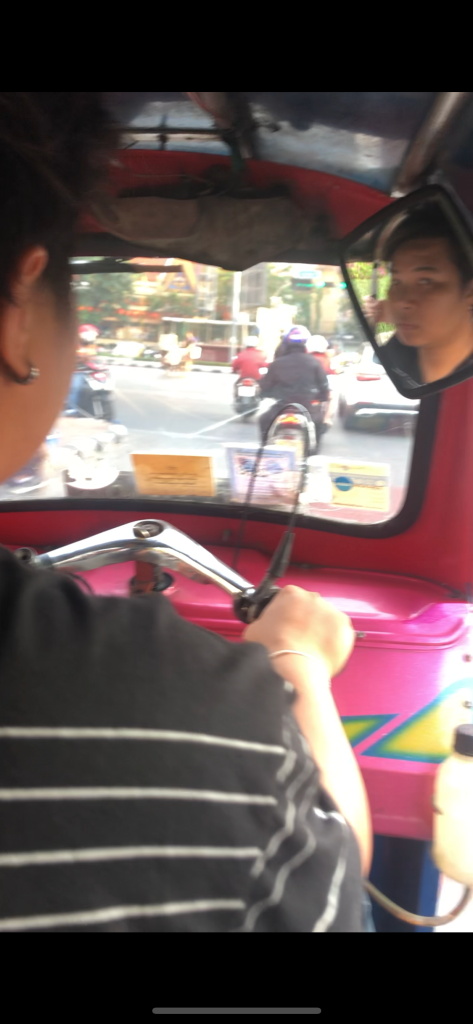
On Thursday, January 23, we had our final free day in Bangkok, Thailand. Each person had the opportunity to explore the city or rest at the hotel in order to prepare for the long journey home. For those who decided to explore, many wound up at the MBK Center, which housed local vendors, delicious Thai food, and offered tuk-tuk rides. Some groups were also able to find hidden vendors and streets by wandering the city.

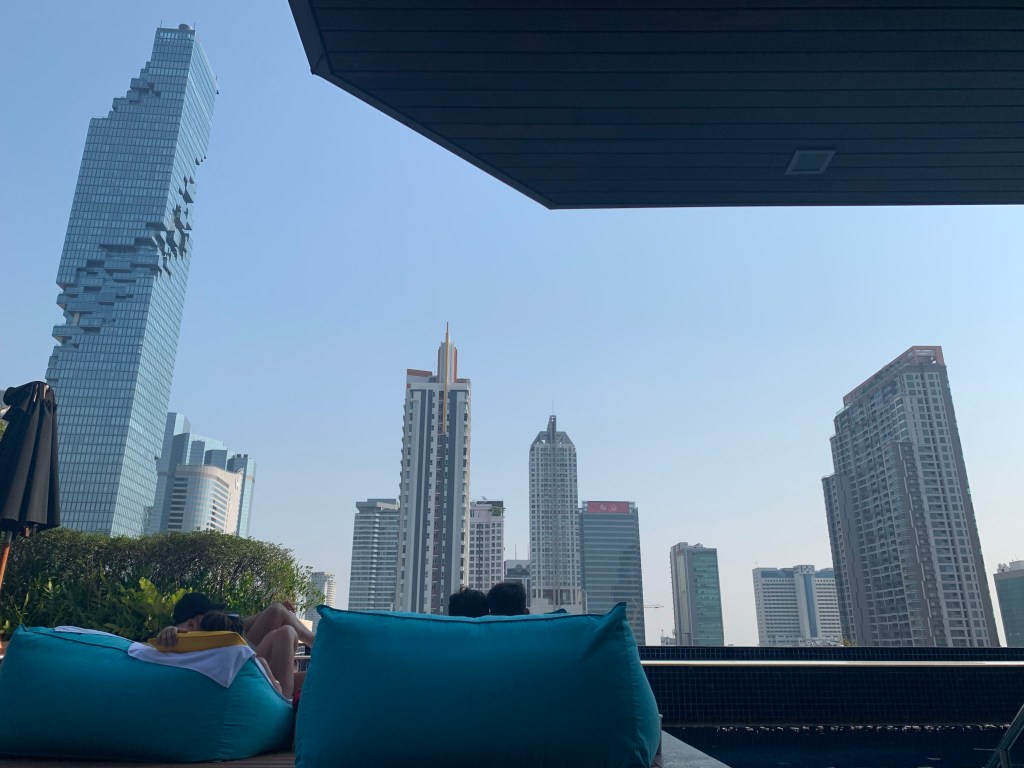
The vendors primarily sold knock-off brands and some featured local artists; this was the day that many students were able to purchase designer items at a largely discounted cost as well as last minute mementos from Bangkok. For those who decided to take a personal day, many laid by the pool and soaked up the beautiful Bangkok cityscape while preparing for the travel day ahead.

That night, we had our final group meal of the trip. Over the course of the trip and Bangkok in particular, we have eaten an overwhelming amount of delicious and authentic Asian cuisine, ranging from Banh Mi to Pad Thai and Tom Yung Goong. That being said, our group was in need of a traditional American meal: burgers. We have noticed a significant shift from the first group meal in Hanoi to our final group meal in Bangkok. While the group was originally timid, we have created an environment of mutual trust and respect where we genuinely enjoy each other’s company. The group has formed closer and long-lasting relationships with one another that will be carried back to Elon.

As we reflect on the trip as a whole, we are faced with nostalgia and sadness that it has come to an end. Ashley Zung succinctly and effectively described our J-term and said, “this has truly been an unforgettable experience, as we have been exposed to a diverse group of students as well as the cultures themselves. As cliché as it sounds, this has been one of the most influential experiences and we are eternally grateful for the leadership embodied in Raj and Mark”. Thank you, Elon, for giving us this opportunity to explore a region of the world that we would not have otherwise immersed ourselves in. Southeast Asia has a home in each one of our hearts.

Nina Valdes & Anna Van Jura

January 22

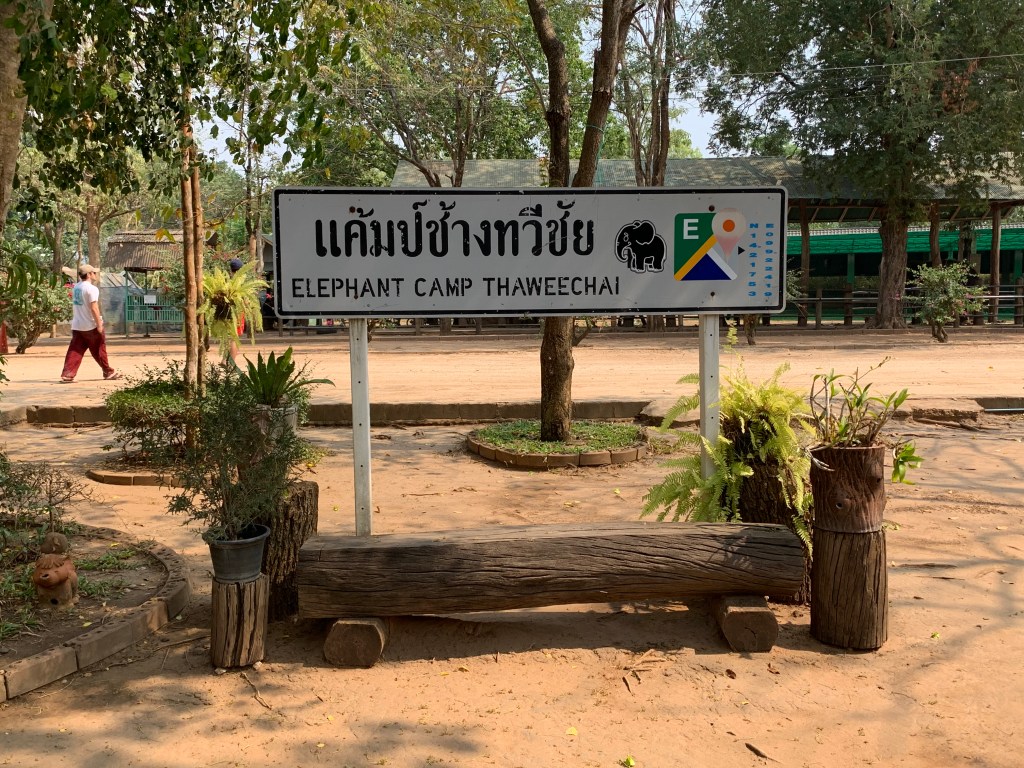
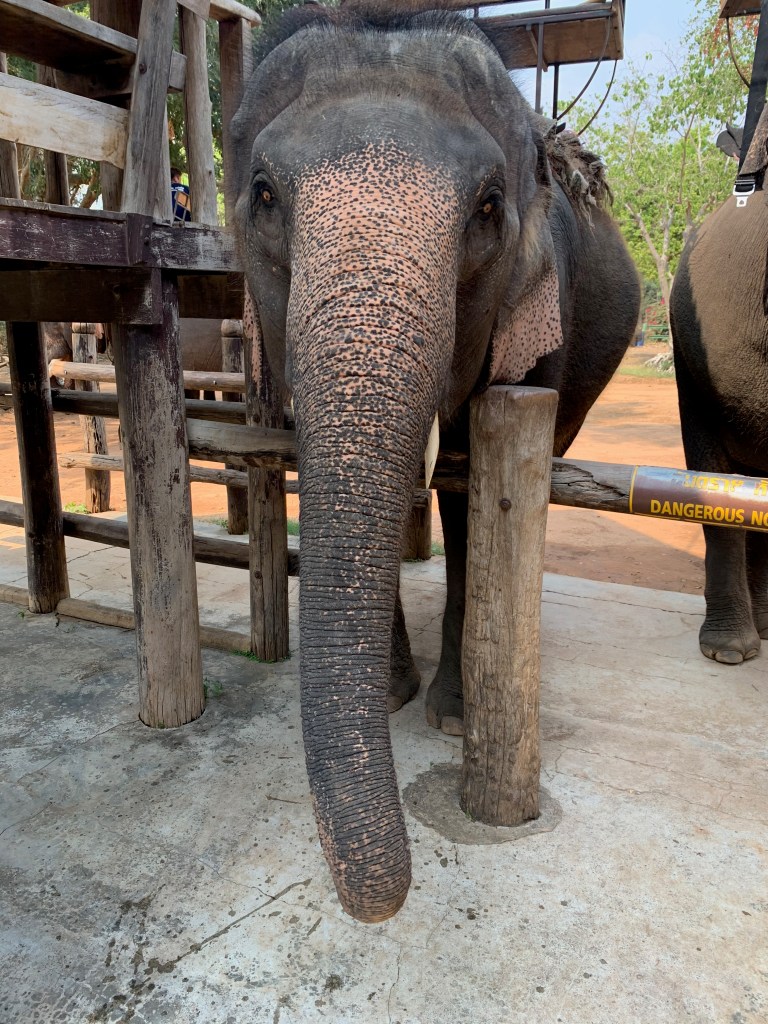
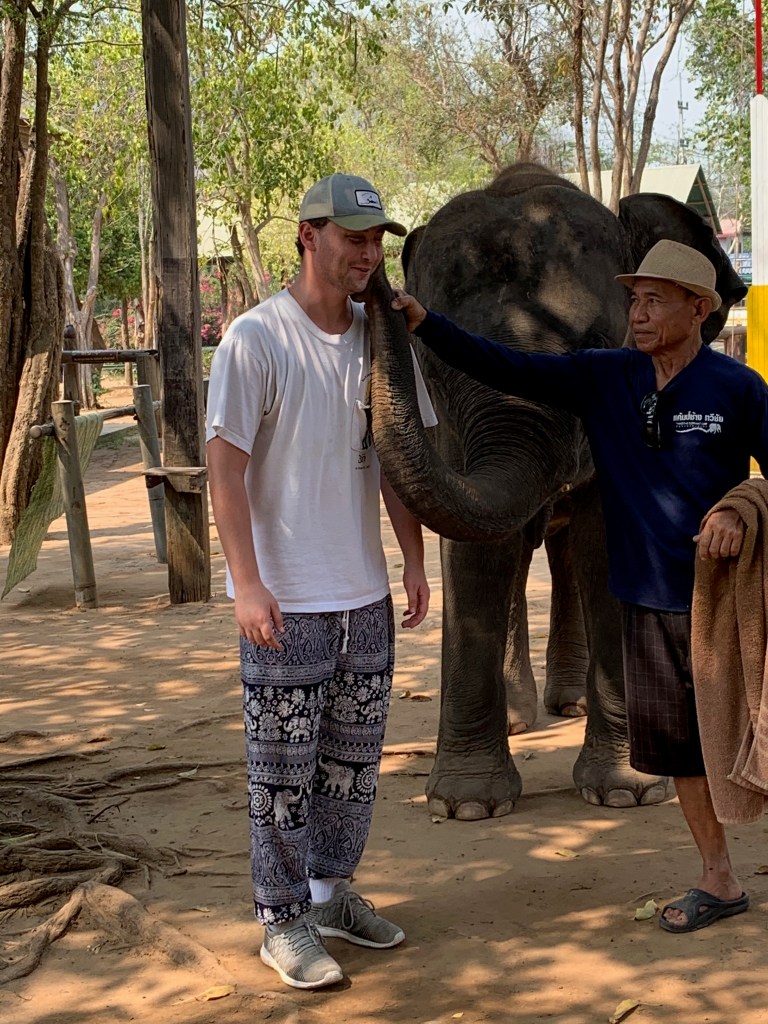
Our final full day in Asia was spent in River Kwai, Thailand. Our morning began bright and early with a 7:45 wake up call to begin our journey. The bus ride was about 3 1/2 hours, and our first official stop on the journey was to the Taweechai elephant camp. At the elephant camp, we were given an option to ride the elephants, or hang out with them. Roughly, the class split in half for these activities. Riding the elephant was a classic Thai experience, however, it was painful to watch the worker use his stick to hurt the elephant when he wasn’t doing exactly what he was supposed to be.

After these activities, we were treated to an elephant show. Some of the tricks the elephants performed were hula hooping, balloon popping and giving massages and kisses.

Harry receiving elephant kisses!

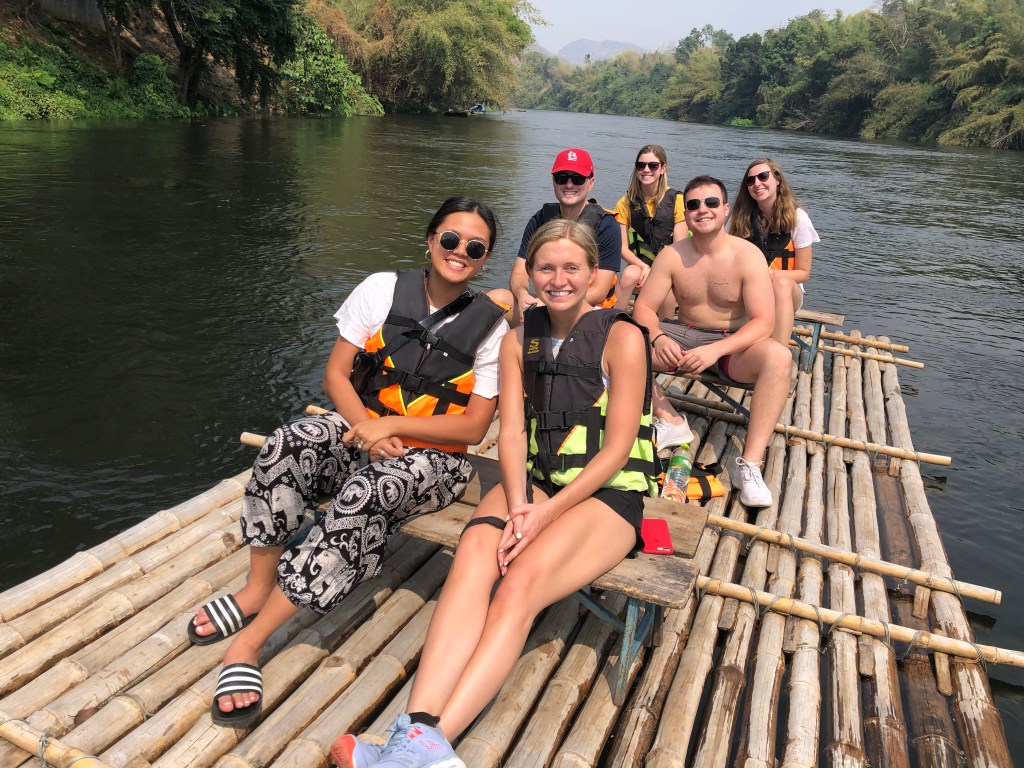
After the show, we took a van ride to the river where we all got life jackets and had a very relaxing ride down the river on a bamboo boat with a person rowing. Some people chose to jump off and go swimming in the river. The views were beautiful.

For lunch, we had a buffet which included cashew chicken, fried rice, tilapia, steamed vegetables, and of course some Singha beer.

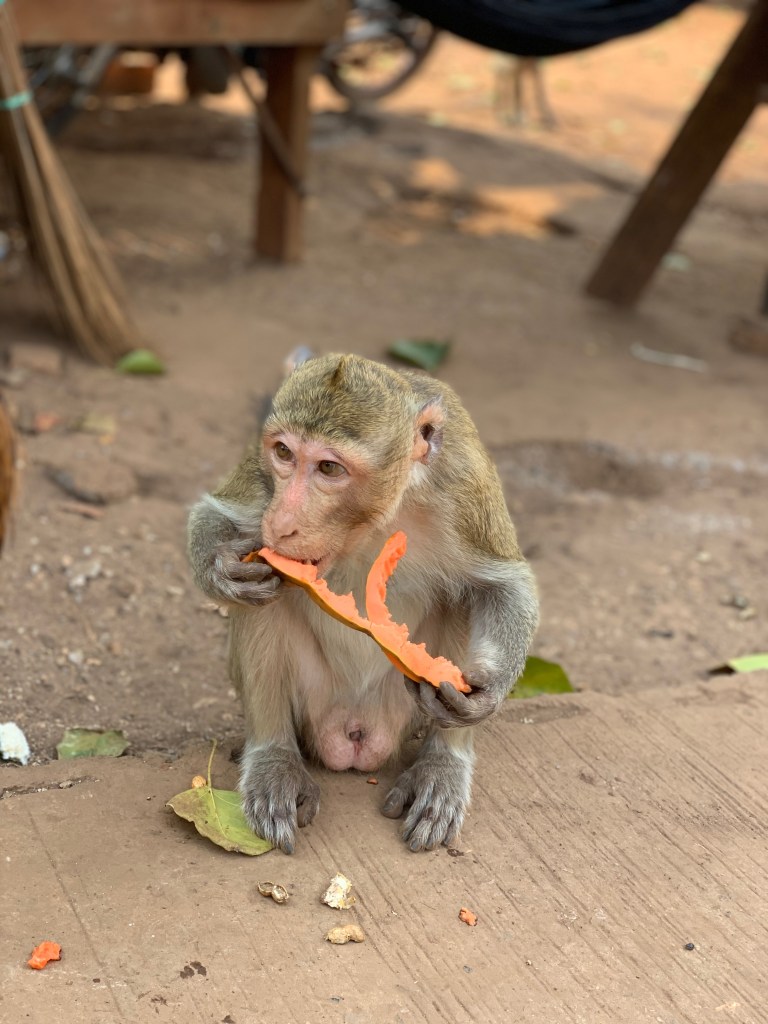
After lunch, we got back on the bus for another journey to the monkeys. At this area, we bought peanuts and papayas to give to the monkeys, which were quite aggressive. If you stared at them for a second too long, they would run after you. It was also a bad idea to tease them.

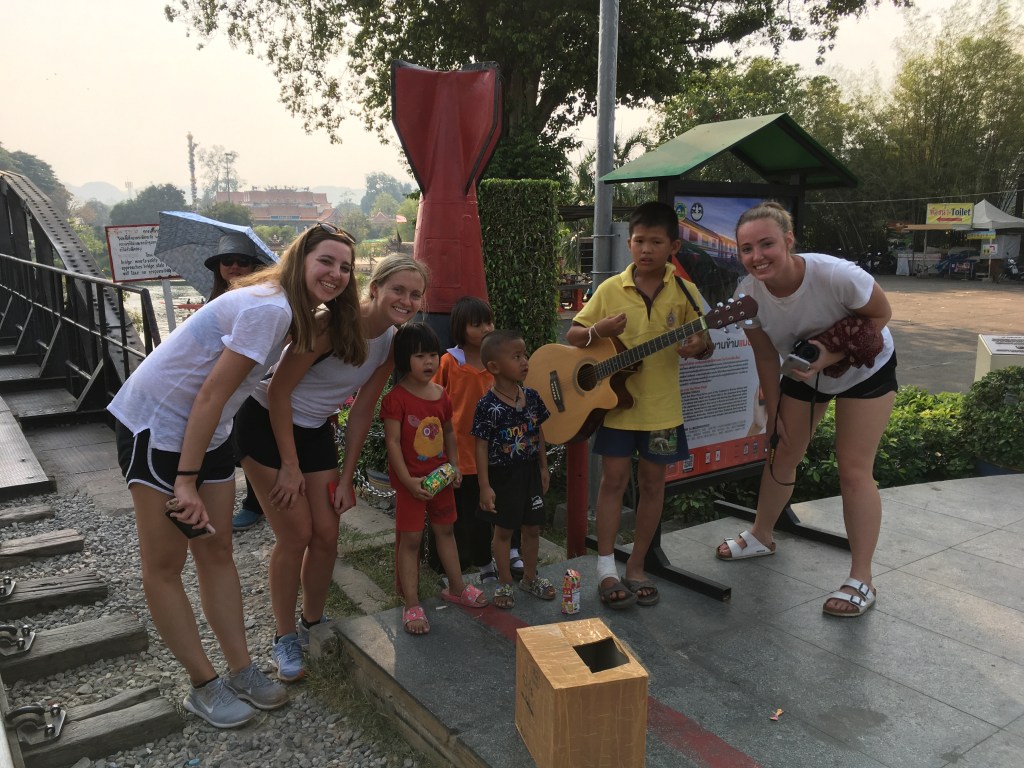
After the monkeys, we went and drove to the bridge on the river where we were able to walk across it. By the bridge, there were children playing the guitar and singing. Our professor, Mark, even joined in and started playing the guitar with them!

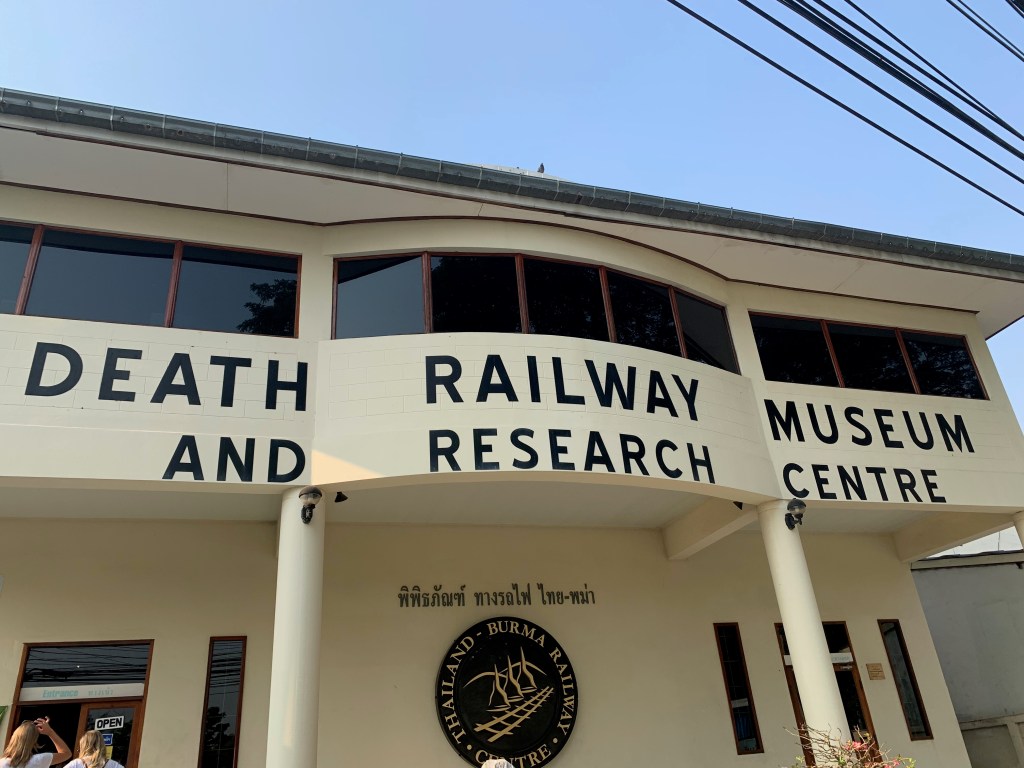
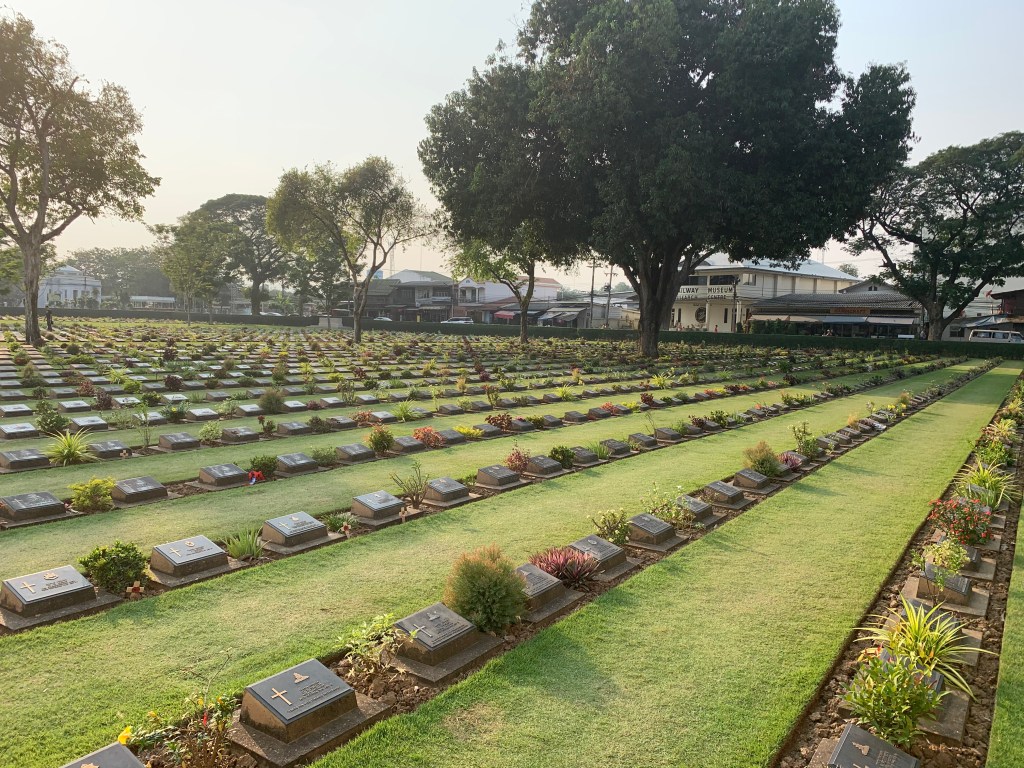
For our last stop, we visited the Kanchanaburi World War II Museum and Cemetery. Today, there are more than 5,000 Commonwealth and almost 1,500 Dutch servicemen buried or commemorated there. This was a humbling moment in our day to honor the sailors, soldiers and airmen who have lost their lives. Then we hopped on the bus for another 3 1/2 hour ride back to the hotel. This was our longest tour day yet (12 hours!). We were all exhausted and ready to shower, eat dinner and go to bed.

Julia Mercurio and Olivia Vomero

January 21

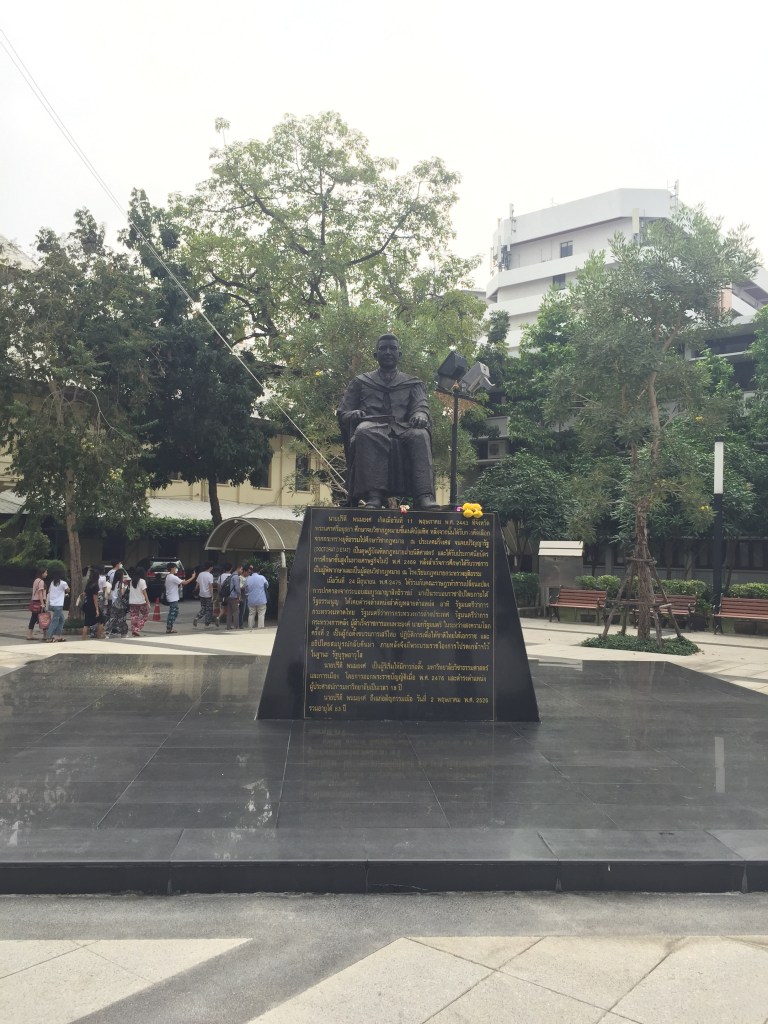
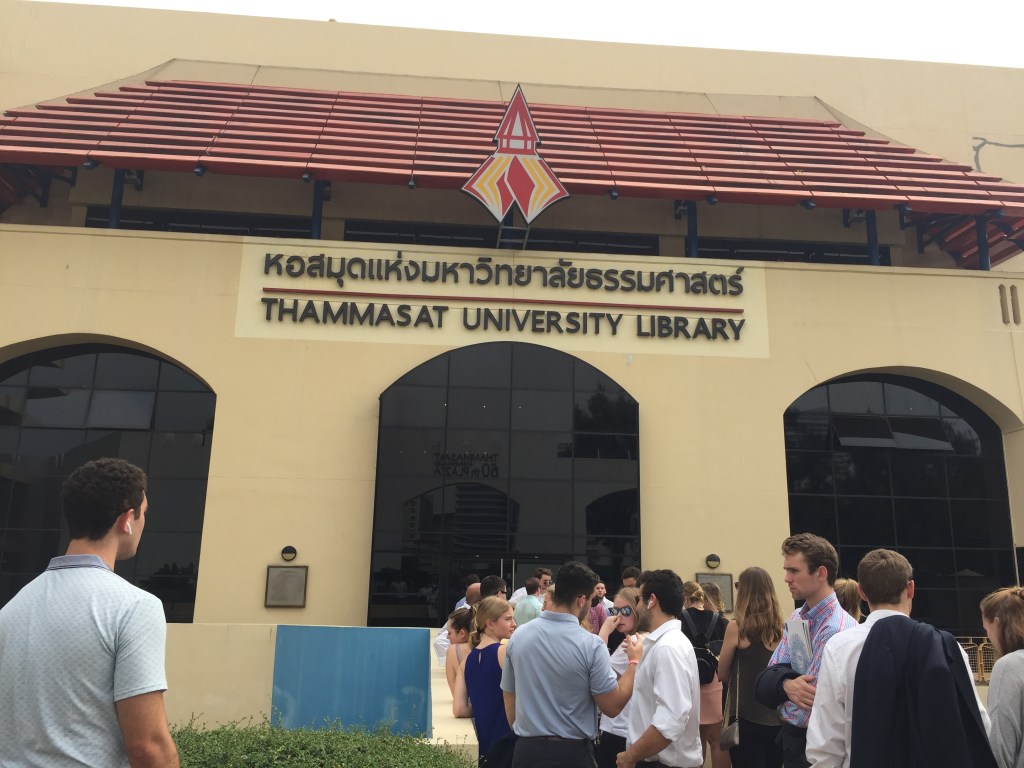
Today we visited the Thammasat University Business school in their Bangkok, Thailand campus. The university was first established in 1934 where they have a statue of their founder.

Statue of the founder of Thammasat University is illustrated above.

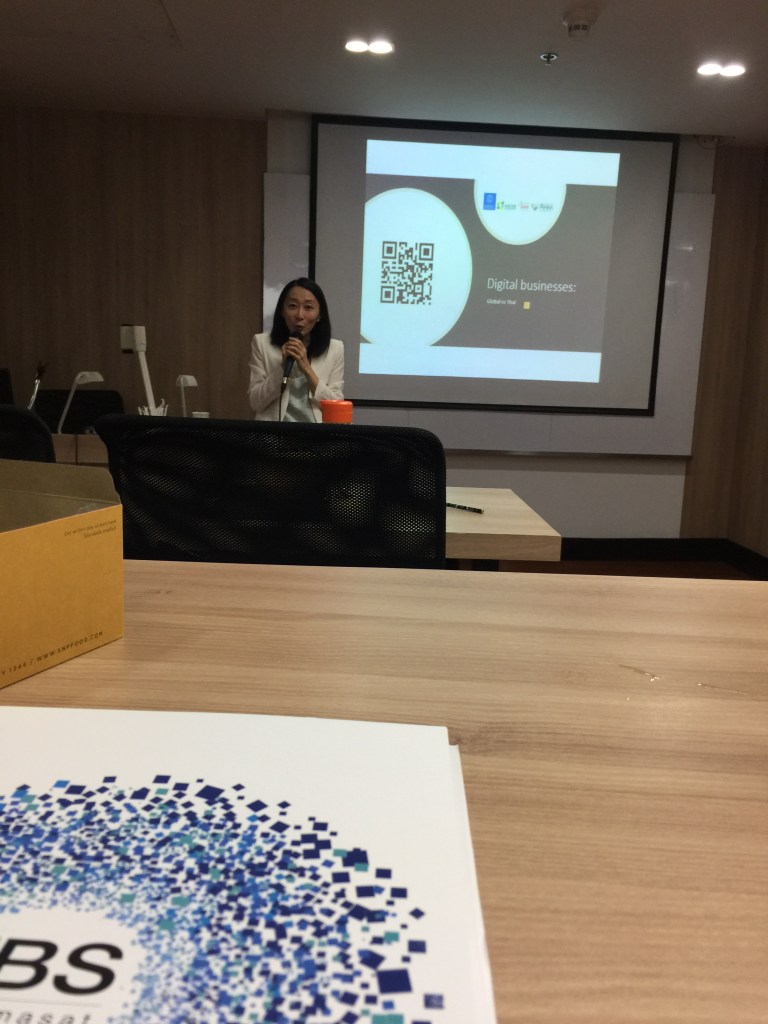
Professor Laddawan gave us a brief lecture about businesses adapting to Thailand’s customs. She taught us about a pipeline versus a platform business model and how that is being more used today. Additionally, she informed us that this model is all about being able to scale the business to a bigger customer base. She gave us the examples of AirBnB, Netflix, and Uber/Grab and how they were able to transform their business model to fit the Thailand people. Uber was sold to Grab in Thailand because Grab went to the cab drivers and recruited them to do more pickups. AirBnB is able to scale their business to all over the world and connect hosts to potential customers. Overall, she highlighted that these companies were able to localize their product or service by using context, behaviors and culture of the region or country.

Professor Laddawan giving a lecture.

After being given a lecture and a tour of the campus, the University invited us to eat lunch at their cafeteria where we enjoyed traditional food that professors and students eat on a regular basis.

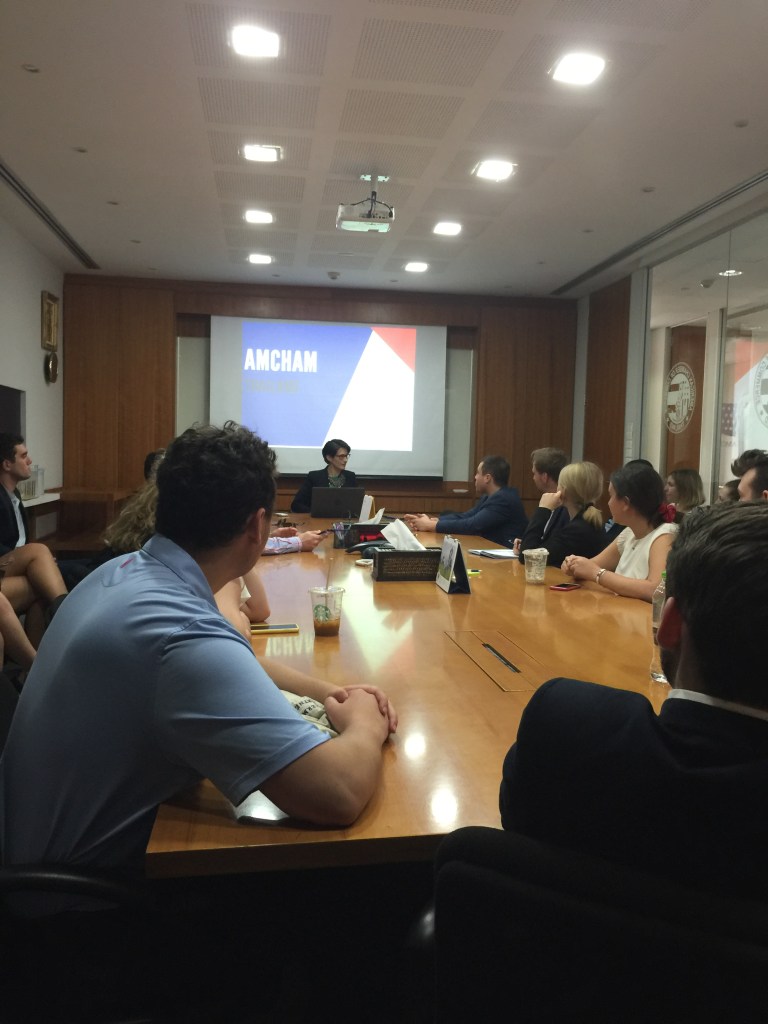
After the University visit, we drove to the American Chamber of Commerce for our second business visit of the day. Sarawan Dever, Deputy Director, welcomed us and gave us a brief hour and a half lecture about AMCHAM, what it does, and how responsibilities differ from each location.

Ms. Sarawan Dever getting ready to begin her presentation.

Throughout the presentation, students were encouraged to ask questions about AMCHAM and about her role in the non-for-profit organization. Afterwards, we took a group photo and thanked her for her presentation.

Shortly after, we arrived at the hotel at approximately 4pm and students enjoyed the remaining of the day by going to the pool, walking around the city, and relaxing in their rooms.

Written by Nik Woltz and Ethan Edelson

Sunday, January 19

Today we are headed to Bangkok, Thailand! We woke up around 8 to get in a quick breakfast before we hopped on the bus to head to the airport. After a 45-minute bus ride, we arrived at the Kuala Lumpur airport.

The tour guide warned us that the check in process could take a while and to come prepared to wait in Kuala Lumpur and in Thailand. One interesting piece of advice he gave was to not tell the staff that we were together as a group. He recommended we not do this if they ask because they would move us into one line together. This would slow down the entire process and potentially put our group behind. As we were waiting in line one of the employees came over to ask if we were all together. For a little bit too long, we each looked back and forth at each other, at the employee, and back at the tour guide. After a long pause, the tour guide said no, and the airline employee walked away seemingly confused. After checking in with the airline we got in line to get our passports and boarding passes checked. After this small check, we went to the next line for customs to get our passports stamped. Finally, we had to go through what looked like a normal security. To our surprise you simply had to put your bags through the x-ray machine and could hold onto your phone and passport. After walking through the machine, it continued to beep after several people. No airport workers did anything, and we just grabbed our bags and walked through. The lack of security seemed slightly concerning because of the amount of precautions we normally go through in the United States. This airport was not only different from the United States, but it was different from any of the other airports we had been through. Previously we had to go through the normal security checkpoints with taking off shoes and removing electronics from our backpacks. Some of the other airports even had the full body scanners that you could to stand in for a few seconds. It was interesting to see the difference in screening systems between airports and airlines. Given the amount of concern we have in the United States, it put some of the group in a state of unease. After the security checkpoint, we boarded our plane and were on our way.

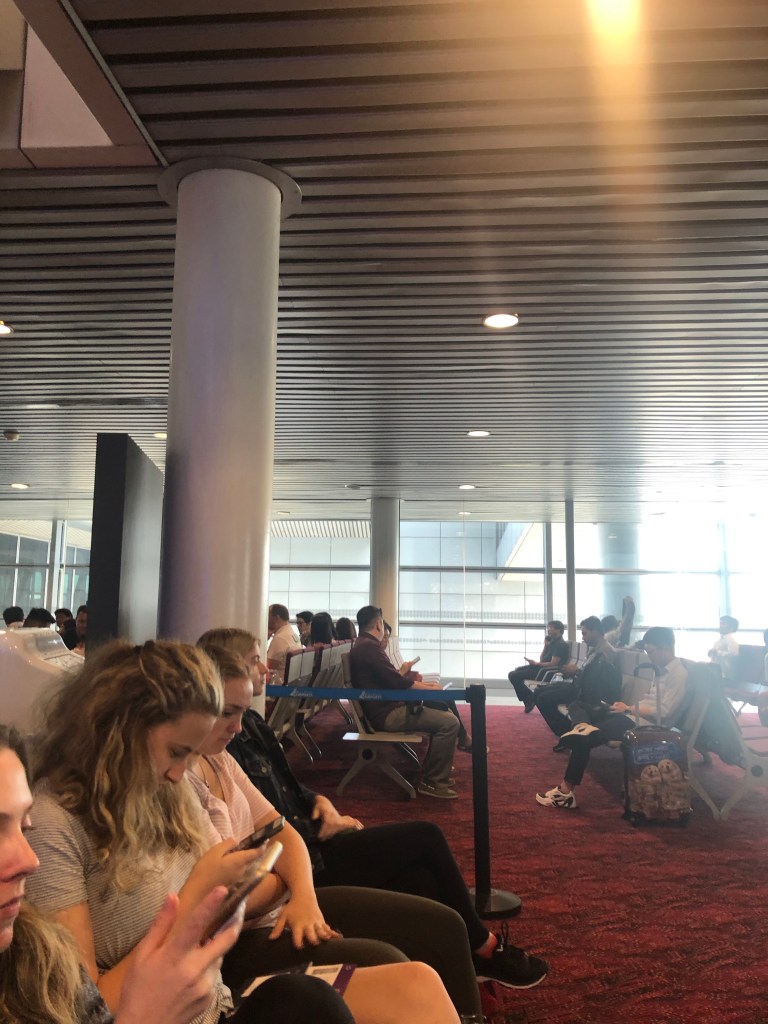
Waiting to board our flight at the Kuala Lumpur airport

Because the plane right was only 2 hours, it felt like a breeze compared to the longer flights we had gone on. After arriving in Thailand, we had to go through immigration again to enter the country. This process went a lot faster than expected because of the number of agents there were on duty. We made it at a great time because about 5 minutes after we got in line, a ton of people came flooding into the lines. After waiting for no more than 10 minutes, we were on our way to baggage claim. We grabbed our bags, went through customs, and then waited for the rest of the group to finish this process. The air outside the airport was much like the other cities we have visited. It did not lack in heat or humidity with a bit of smog.

On our way to the hotel, we noticed the number of masks people wore and the decreased visibility in the air. After reading a couple of articles on the face masks, it’s interesting how all-around Asia they’re so commonly used. One article explained how the masks were starting to become more fashionable than just the standard blue mask. Pop stars and musicians promote certain types of masks and those endorsed have increased in popularity. It will be interesting to see if masks start to be used in other countries and regions as pollution continues to increase around the world. Leaving dinner we headed toward the night market near our hotel in Bangkok. At first, I wasn’t expecting it to be as intricate as it was. Stands and booths lined up neck to neck in the street and the alley ways between shops. Vendors selling just about anything you could imagine: jewelry, knock-off designer wear, elephant pants, t-shirts, and other various vibrant nicknacks. It was fun to see all of the things you could get, but you definitely need to be able to hold your own, as vendors will be quick to barter with you, or try and get you into their club or bar. However, after successfully purchasing some elephant pants, we decided we wanted to rest up for the next few days of activities we have ahead of us, and head back to the hotel. 

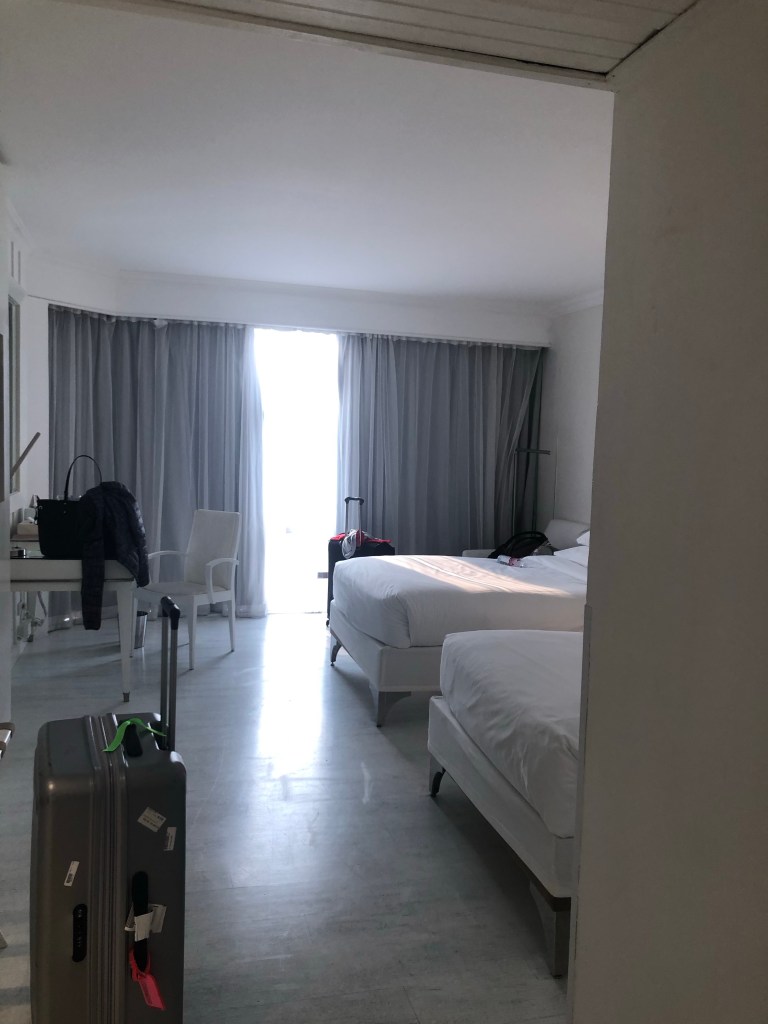
Image of our hotel room at the Pullman G Bangkok
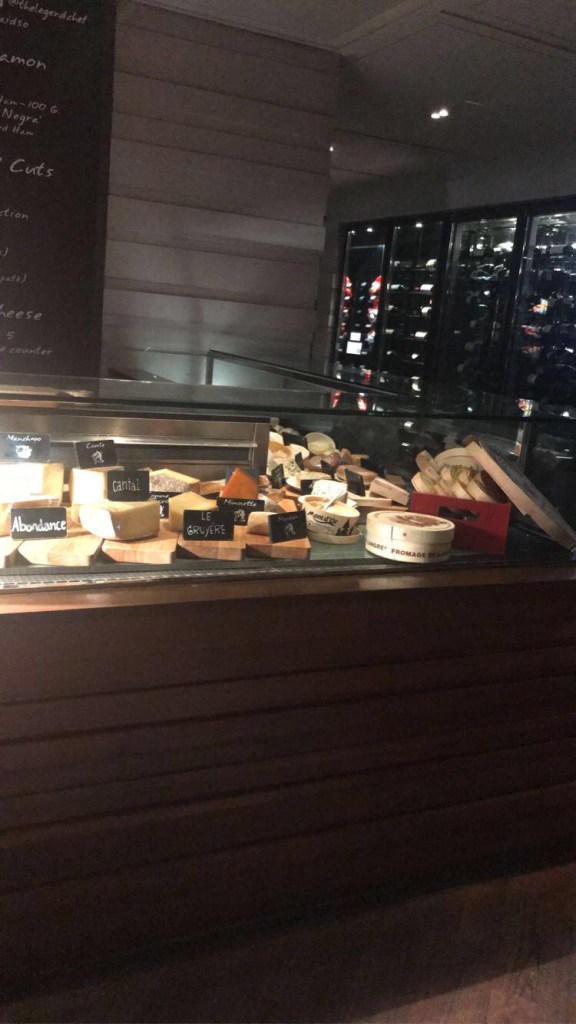
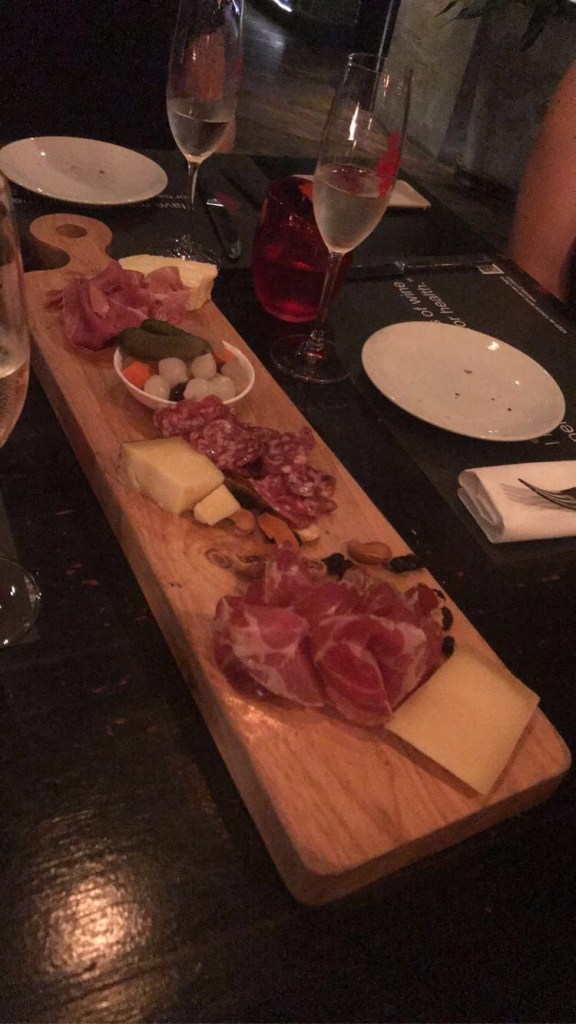
Assortment of cheeses at the rooftop bar

At the hotel we decided to finish off our lovely evening at the rooftop bar. Feeling very underdressed for the ambience, we were seated outside and immediately the view took our breath away. Cozy, romantic, and quiet, this bar is the perfect place to end your night. With a couple cocktails and glasses of wine, we were able to relax and enjoy the beauty of Bangkok to its fullest extent.

Cheeseboard at the rooftop bar

By Morgan Mathews & Julia Edwards

Saturday, January 18

We started off our free day in Kuala Lumpur by sleeping in. Since we’ve been traveling for more than 2 weeks now, it was great to stay in bed for a couple more hours than normal. We decided we were going to take today slowly and use it as a refresh day. After sleeping in, we went to the hotel gym to get in a morning workout. This was the best gym out of all of the properties because they had plenty of treadmills, machines, and free weights to choose from. After a quick shower, we decided to stay on property and go to the hotel lunch buffet where we normally have breakfast. The restaurant was called the Lemon Garden Café located in the Shangri-La Hotel. This was no ordinary buffet because it had every type of cuisine you could think of. It was interesting how the buffet represented so many different cultures from around the world with food traditionally made across Asia, India, Europe, and even in the United States. The diversity in food and the people sitting around us made it for a vibrant and exciting atmosphere. We started talking to some friends about how meals in hotel restaurants specifically in the United States looked. We questioned if they were as inclusive to our countries and the assortment of options that were available. The scale of this hotel was much different than normal, but it would be interesting to look at a hotel buffet in the future and see if they are catering to other cultures preferences. After eating way too much, we knew we still had to try some of the desserts. There was no lack of options with the amounts of desserts across the tables. One of our favorite parts was the fondue faucet where you could choose out of milk or white chocolate.

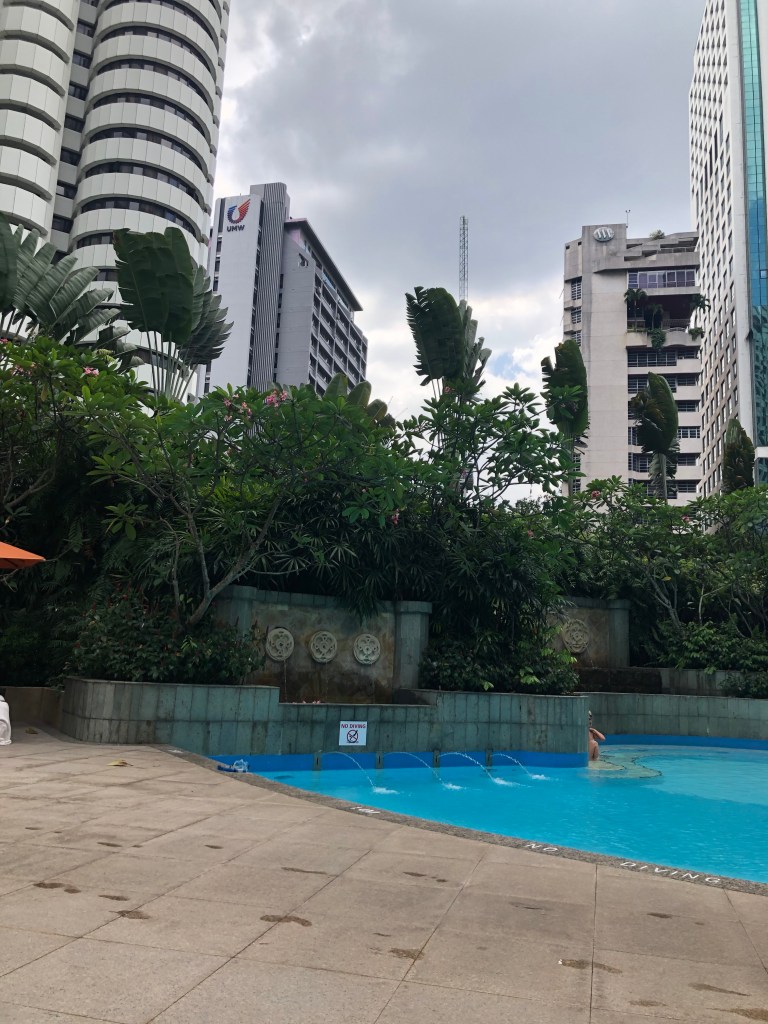
The view from the pool at the Shangri-La Hotel
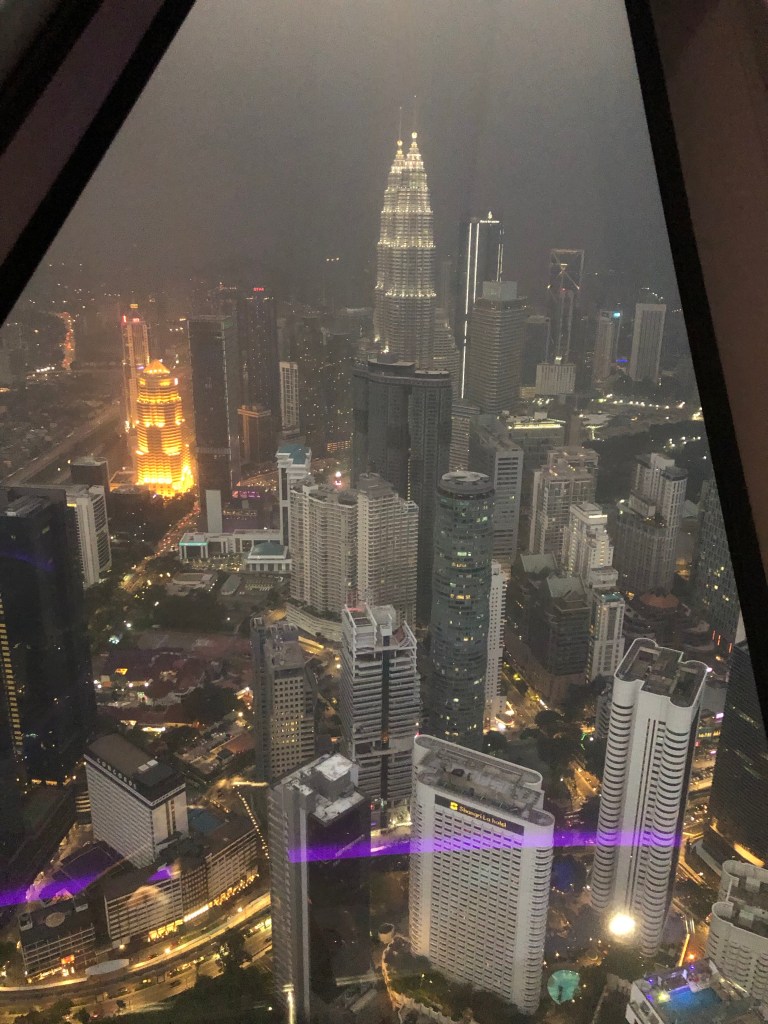
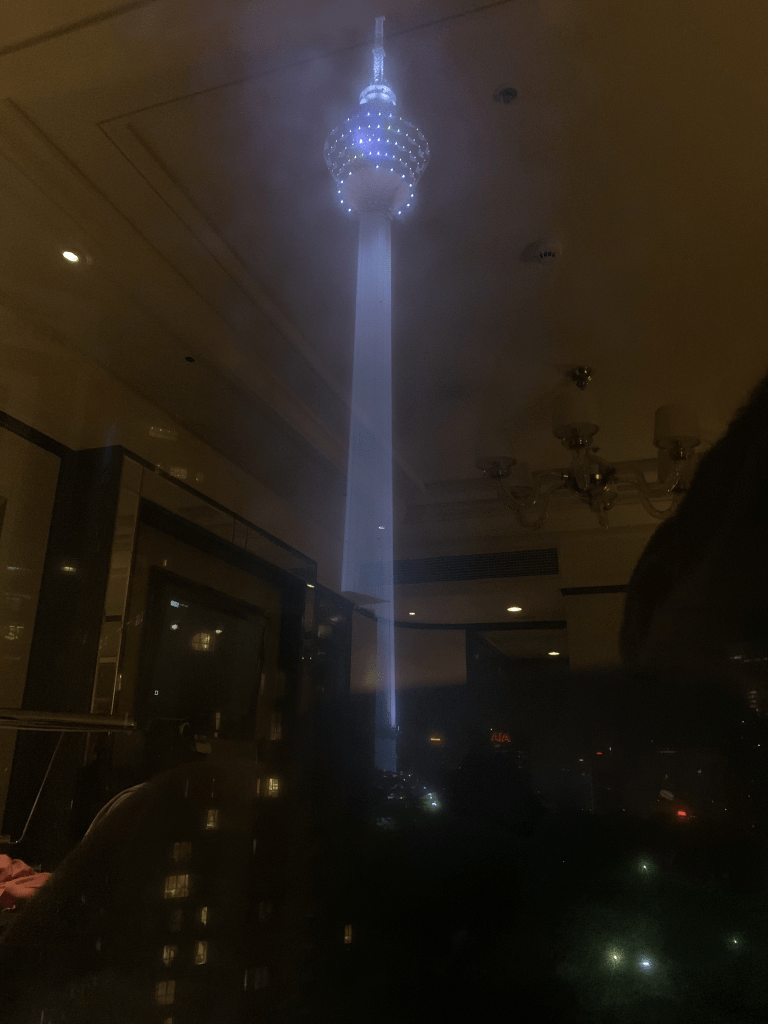
The view from the Kuala Lumpur Tower

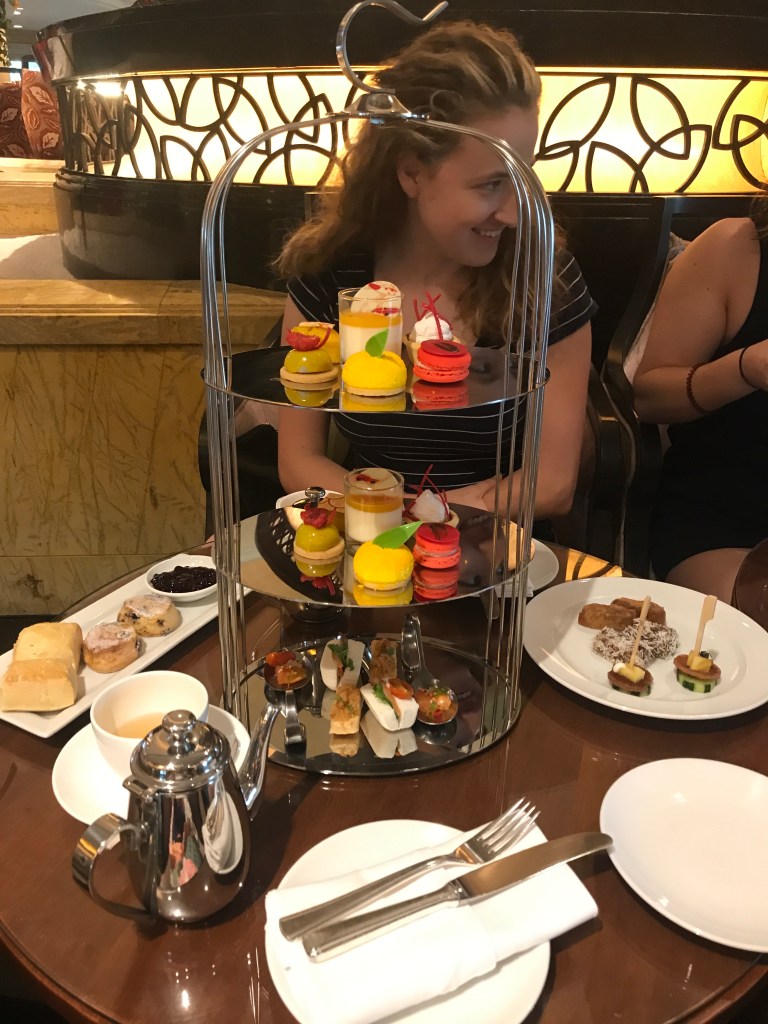
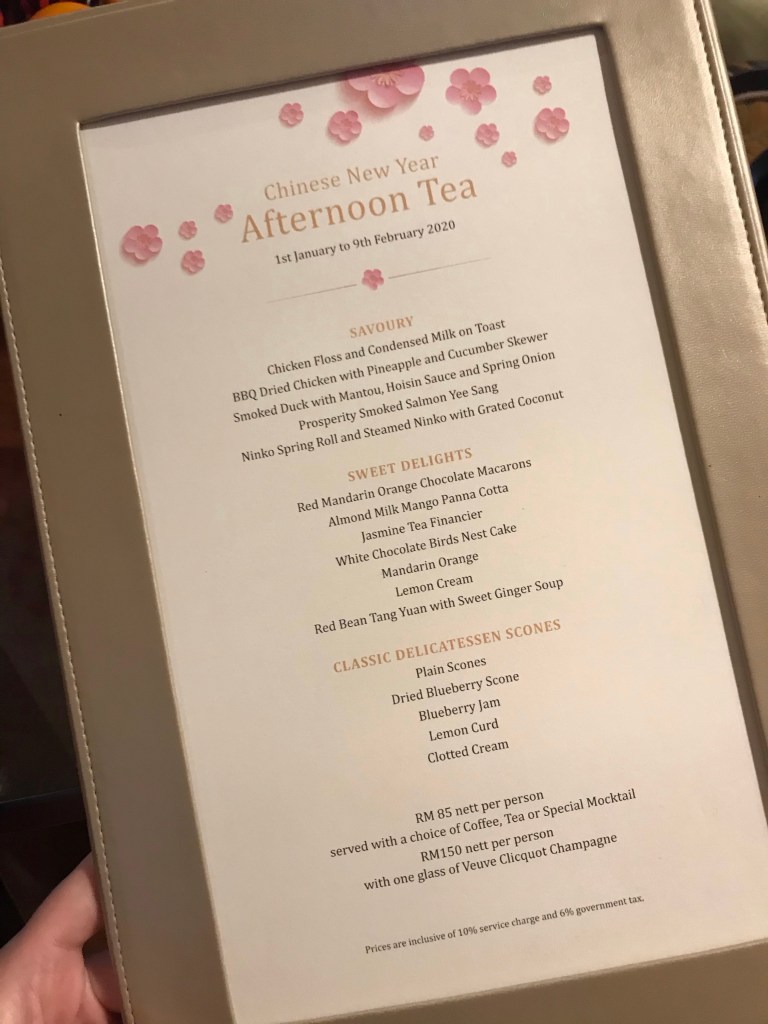
After finishing up at lunch, we decided to meet some of the rest of the group at the pool. We checked the UV index and it was at a 12! It was almost unbearable to be in the sun for more than 20 minutes. Interested to learn more we decided to do some research into the UV index and how the rays are really affecting our bodies in this type of heat. Consumer Reports states “The UV index is a way to convey the risk of sun damage by putting a number on it.” Surprisingly, the index was not developed until 1994 (Consumer Reports). The Environmental Protection Agency advises that if the index if an 8 or above to rays are very high to extreme. Thus, meaning they advise that you should seek shade and wear protective clothing. The rays are so strong at the extreme level that skin can start burn in minutes (Consumer Reports). To say the least it made sense that it was uncomfortable to sit any longer than a few minutes in the sun. The outdoor pool had an amazing view of the Kuala Lumpur tower looming above us. To continue the free day, we decided to go to the afternoon tea the hotel was offering to celebrate the Chinese New Year. After hitting the pool and rejuvenating in the steam room and sauna, we decided to indulge ourselves with the Shangri-La’s Chinese New Year special afternoon tea. The service came with your choice of a large selection of coffee, tea, or mocktail, as well as a substantial selection of sweet, savory, and scone delights. Going into this I don’t think we understood how bountiful the service would be, and our eyes were a little bigger than our stomachs. The beautiful tower of treats was supposed to be for two people, but we definitely could have shared with more! It was extremely delicious, and the combinations of flavors and fun exotic foods was a unique experience. We still are trying to figure out what exactly Ninko is. After a lovely 3 or so hours of slowly trying to get through all of the goodies, we decided that we should try and venture outside the hotel for the day, eyeing the large tower visible from our room. The Marena Kuala Lumpur Tower is a big observation deck with three or four separate deck outlooks. There were two choices for ticket purchases, the cheaper option that brings you only to the lowest observation deck (that’s still 250+meters tall), or the more expensive package that allows you to visit all three floors. As classic college students, we went for the cheaper option and figured being on the lower observation deck would still provide us with a great birds-eye view of Kuala Lumpur. However, as lovely as it was, it was a little anti-climactic and highly touristy (of course). I’m not sure I would recommend it as a Kuala Lumpur must-do, but it fit in our day perfectly and we had time to kill. 
Chinese New Year afternoon treats
Menu for Afternoon Tea at the Shangri-La Hotel

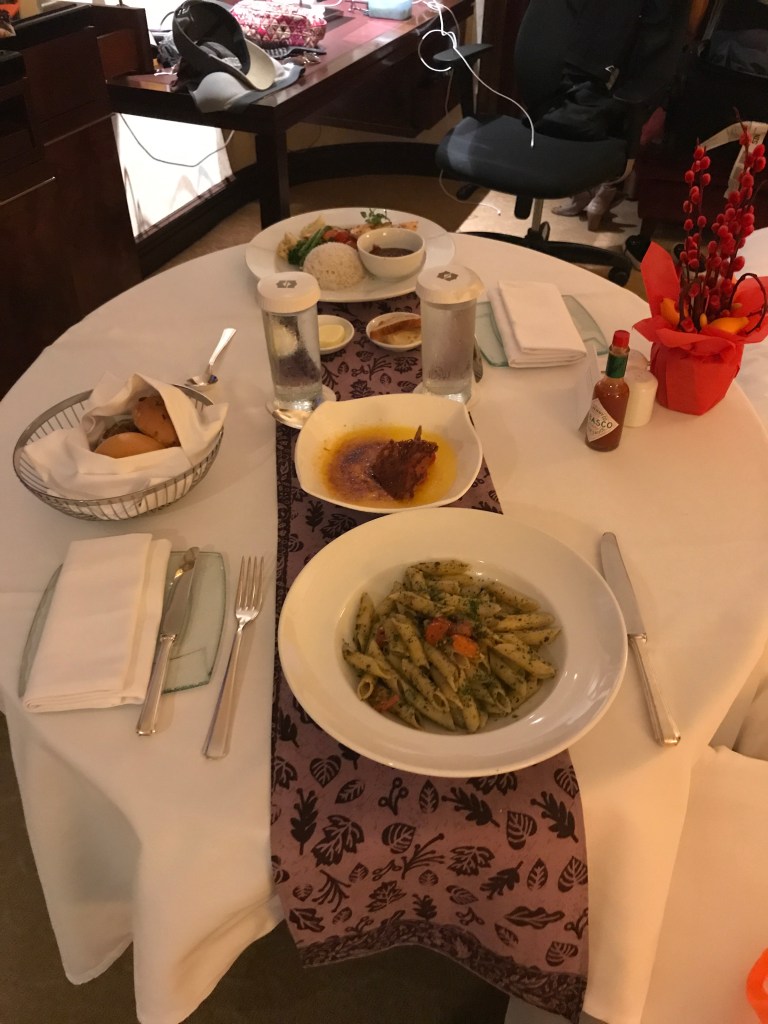
Seeing as we were so exhausted from our extremely trying day, we decided we should treat ourselves to the room service back at the hotel. Ordering lovely chicken rice and veggie dishes, as well as pesto pasta and some creme brûlée to top it off, the room service was certainly a highlight. Wheeled in with white linen table clothes, flowers, and a complimentary bread basket, we knew we made the best decision. The food was delicious, and all in all it was relatively cheap for what you were getting, so we went to bed very happy.

Room service from the Shangri-La!
By Morgan Mathews & Julia Edwards

January 17th

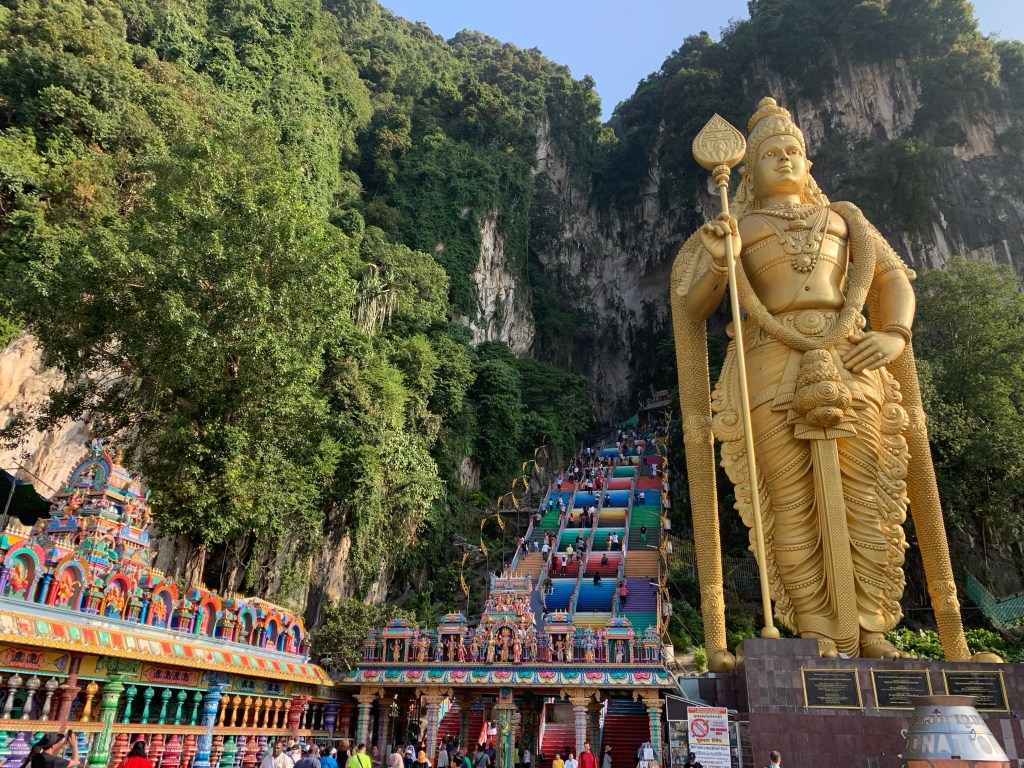
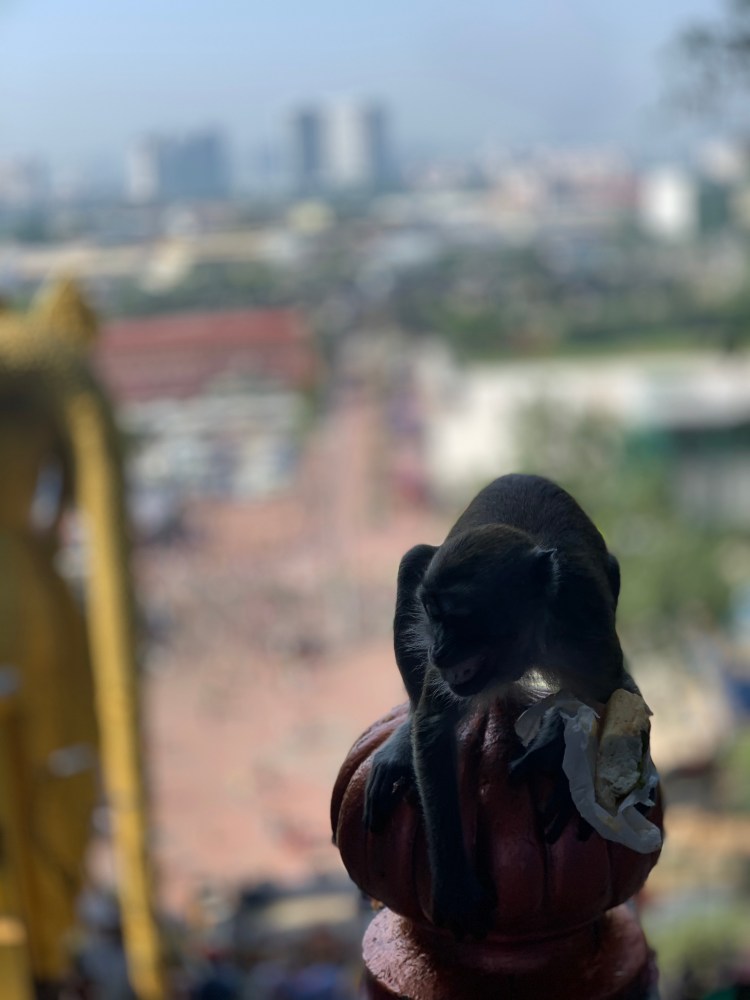
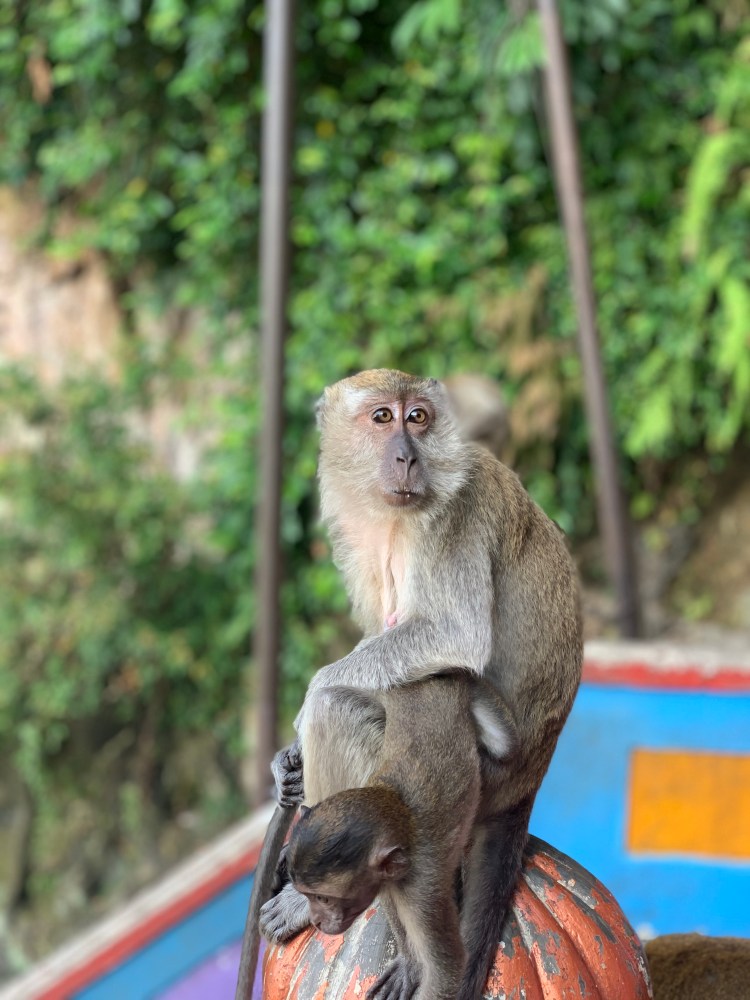
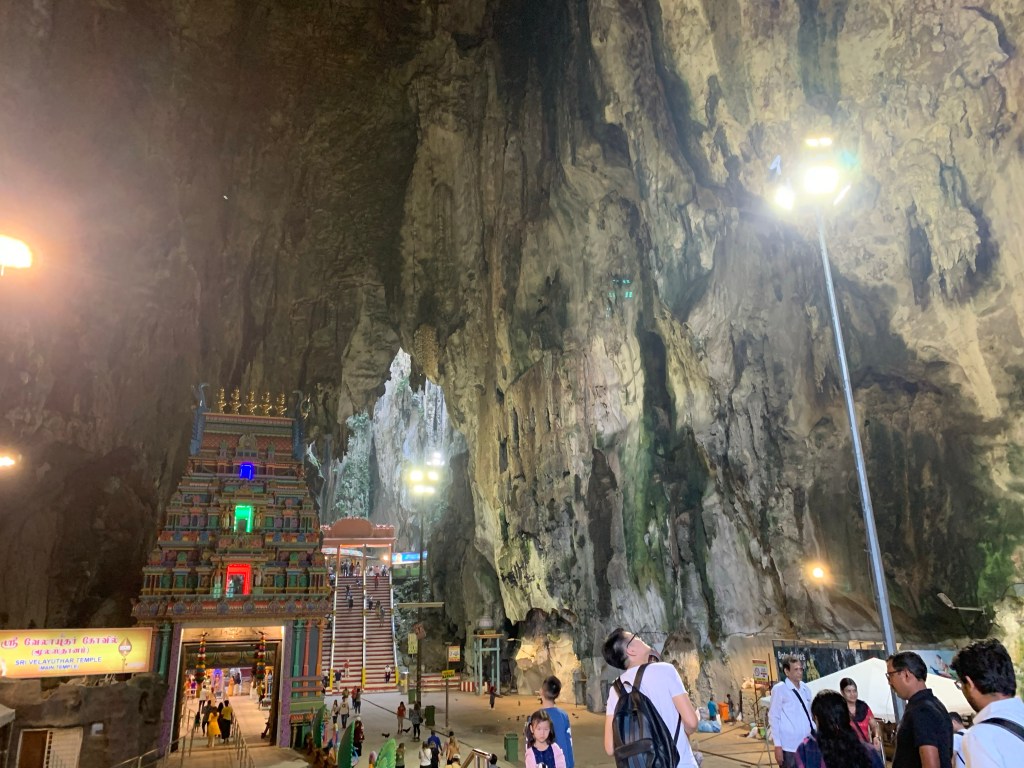
Beginning our first full day in Malaysia, we began our day at the Batu Caves in the city of Gombak.  Boasting an astonishing 272 flights of stairs in the 90 F heat, it was a sweaty morning, to say the least.  However, while summiting the cave, we were pleasantly surprised by the abundance of monkey’s which seemed to will us to the top.  On a side note – while one may surmise such small monkey would be very kind, unfortunately, this is simply not the case. 

Pictured is an angry monkey as I may have stepped too close while he enjoyed his Subway sandwich. 

I digress.  Now fully within the cave, there were two shrines within the larger temple where groups gathered to pray. 

Finally, as we embarked on our descent down the stairs of the Batu Caves, some of our group members enjoyed the infamous fruit, Durian, for the first time which for most was a less than pleasant experience. 

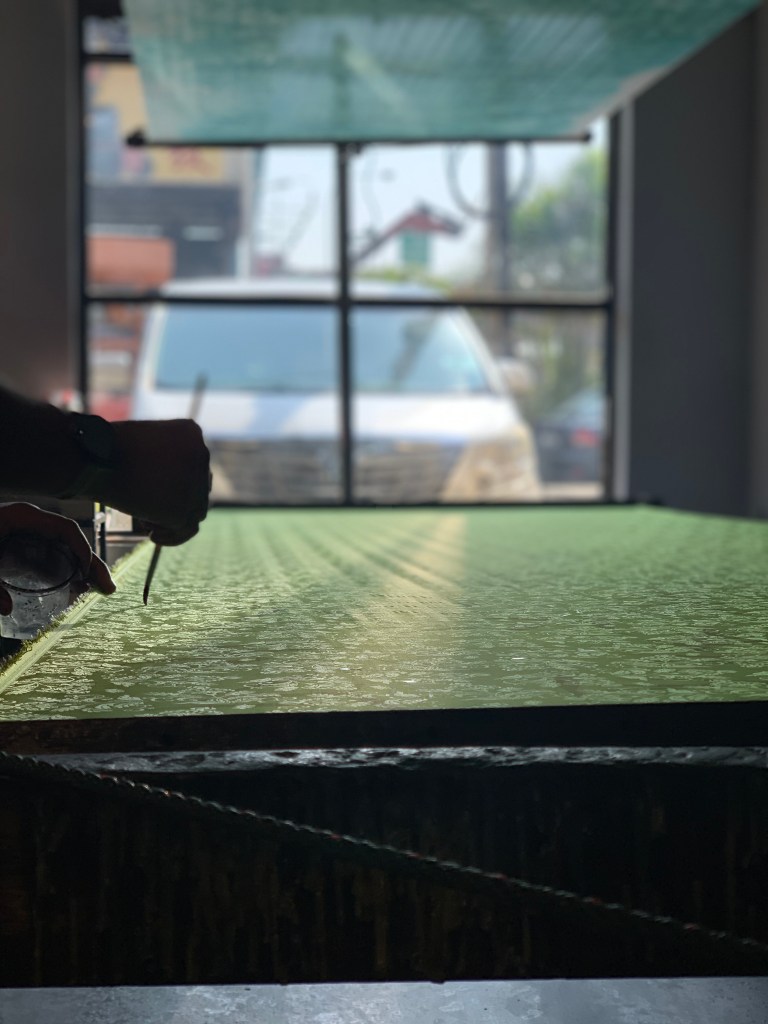
After a short and very much needed air-conditioned bus ride from the Batu Caves, we stopped at a small silk painting gallery/store. Here we purchased original paintings and scarves and were able to watch firsthand the beautiful craftsmanship of a couple artists as they painted organic designs on silk canvases.

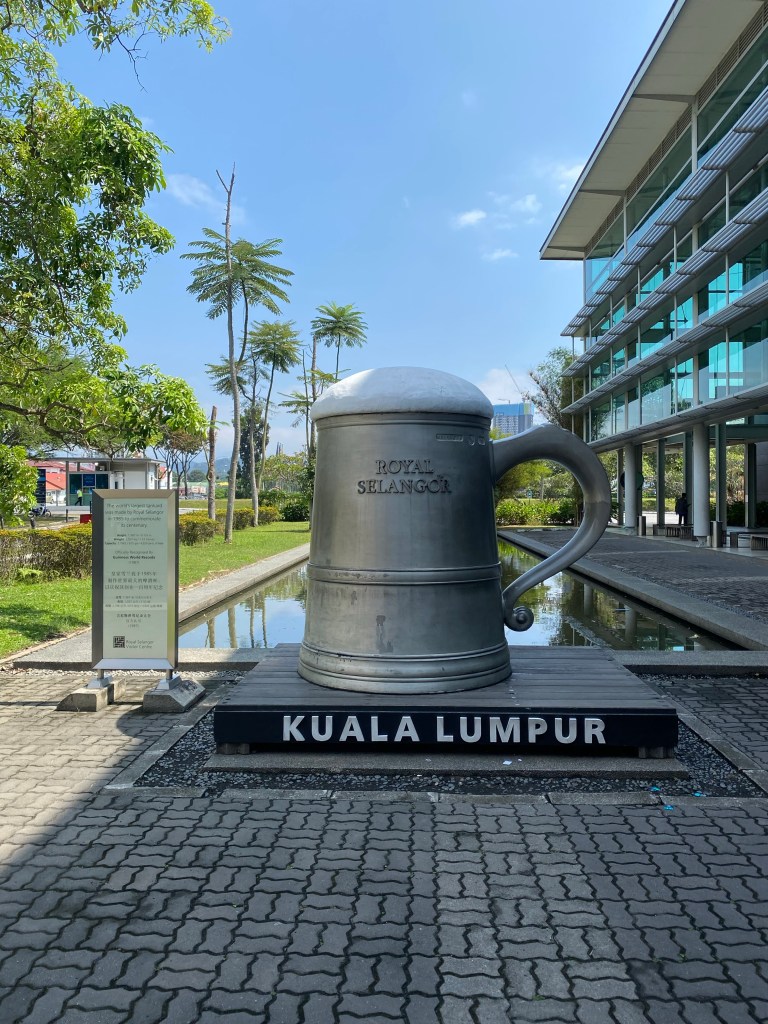
Later on, we traveled to one of the last remaining Pewter factories in Malaysia.  Pewter was one of Malaysia’s highest exports before its margins were flipped making it more expensive to make causing a collapse of its market.  Stepping back for a second, Pewter is made of a mixture of three elements: Tin + Antimony + Copper = Pewter.  After walking through the factory we were informed on both the factory’s history, as well as its day-to-day operations.   

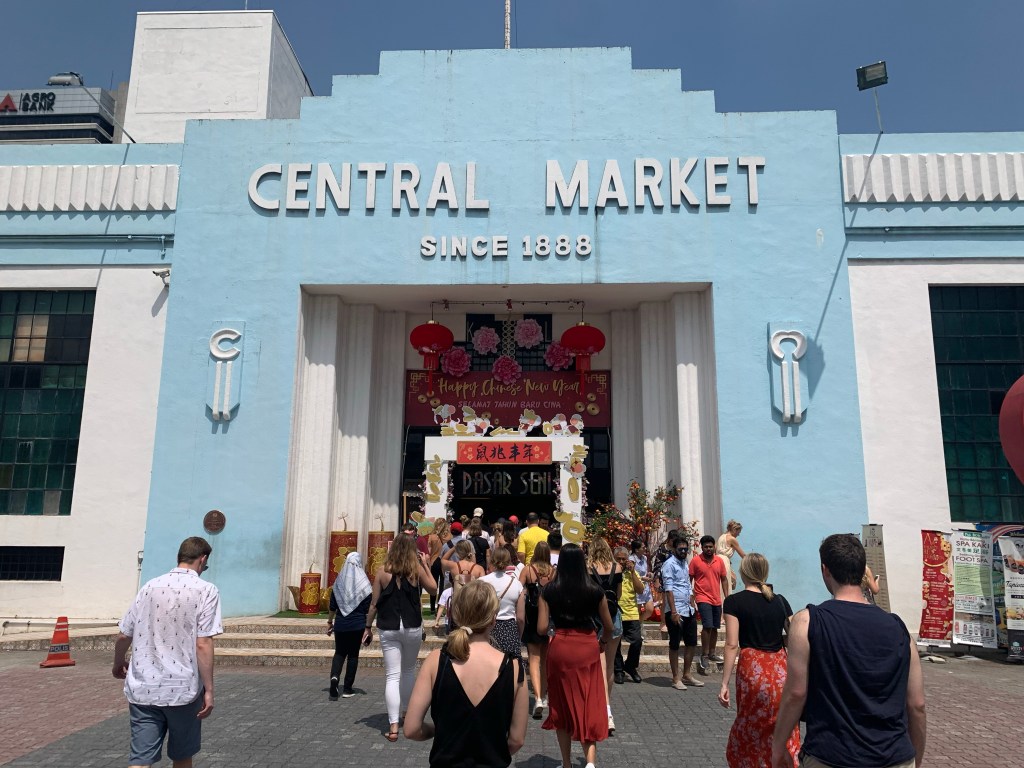
For lunch we visited the Kuala Lumpur’s central market. Once of its oldest, opened since 1888, was full of stores and restaurants and was a perfect place to grab a bite.

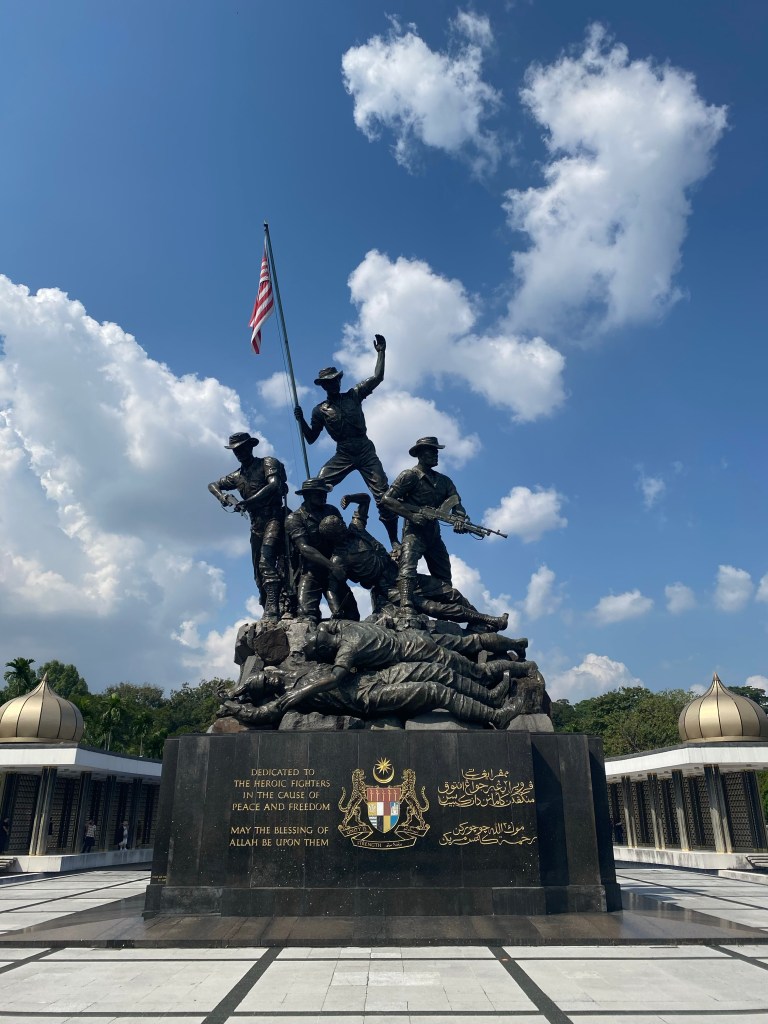
Towards the tail end of our long and busy day, we had three more stops which we decided only a quick visit was necessary. Our first was to the National Monument, commemorating the men who sacrificed their lives for Malaysia’s fight for freedom during WWII. This statue is very similar to the Marine Corps War Memorial in Virginia and is made by the same sculptor, Felix de Weldon.

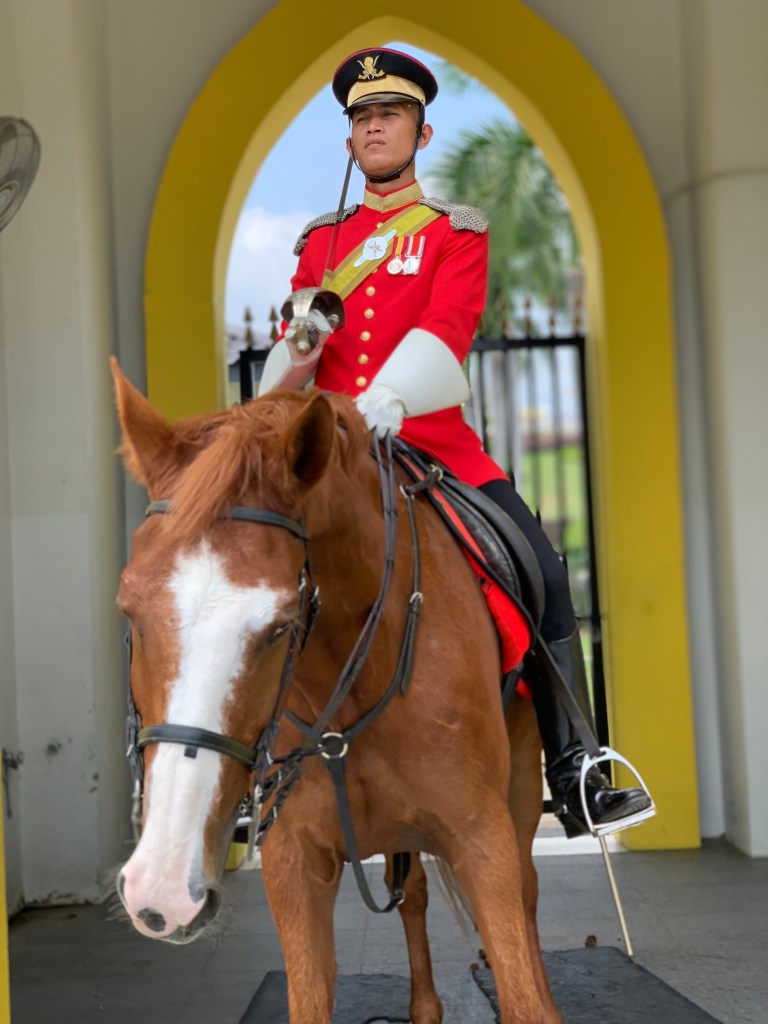
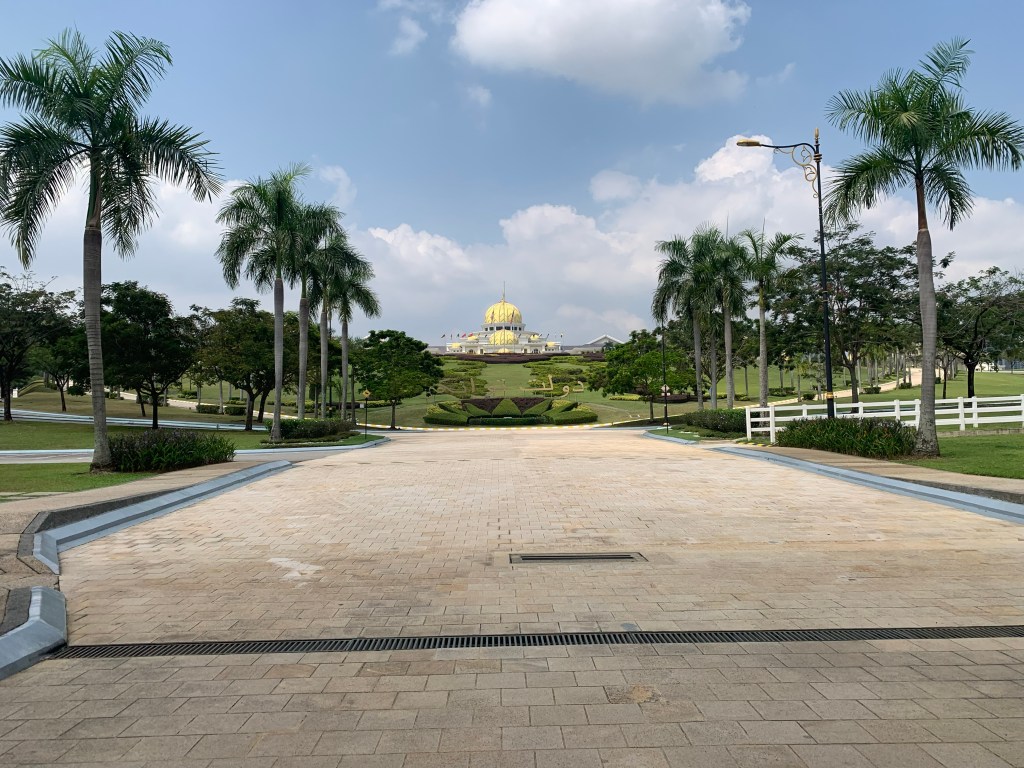
The second stop was to the Istana Negara, the palace that homes Yang di-Pertuan Agong, the Monarch of Malaysia. The national palace takes up about 250 acres of land and cost 812 million Malaysian ringgit (~$200m) to build! The main gate was flanked by two guards mounted on their steeds and was as close to the palace we could get.

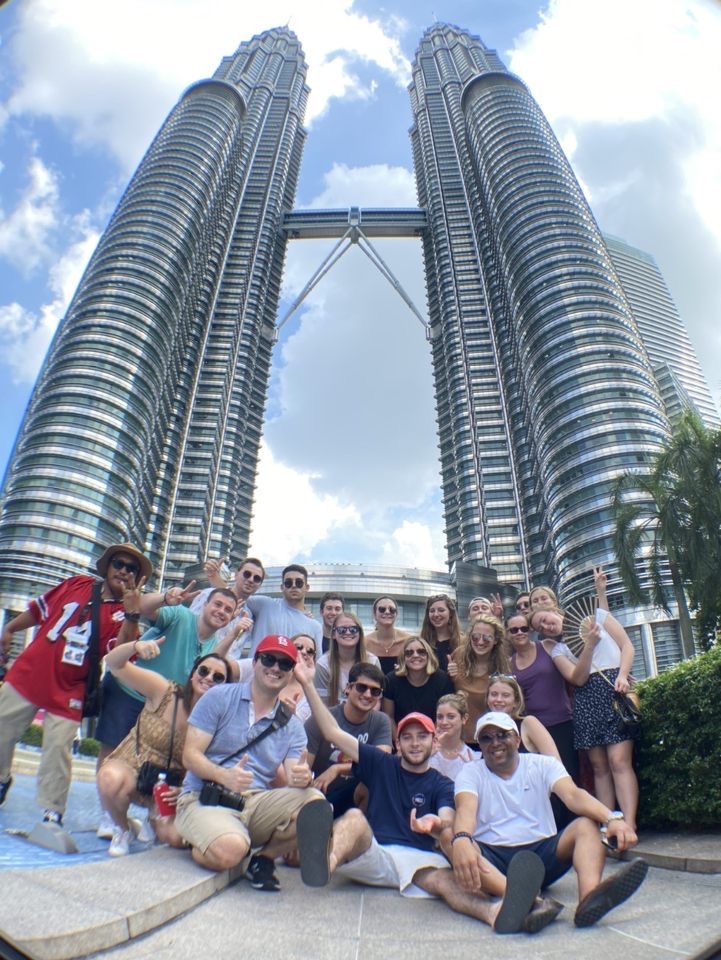
Our last stop was to the Petronas Twin Towers. These 88-floor dual office buildings are one of the more notable landmarks of Kuala Lumpur for their extreme heights of 1483 feet! The buildings were the joint tallest in the world from 1998-2004 and remain the tallest twin towers in the world.

By Justin Sirota and Rocco Babun

January 20th

Golden Buddha Temple 

Boom was our tour guide for the day. Our first stop of the day was to see the Golden Buddha Temple in Bangkok. It is located in the Wat Traimit Temple. This temple houses the world’s biggest Golden Buddha. It is more than 700 years old and was built in Sukhothai’s era. It weighs over 5 tons, comprised of solid 18 carat gold, and measures around 12ft in width and is over 15ft tall. The temple was rebuilt in 1955, which is how they discovered the Buddha is completely covered in gold.  Before this they thought it was just a plaster Buddha but it was dropped in the moving process and that is when they discovered the golden surface under the plaster. 

The Golden Buddha revealed from its plaster

Grand Palace with Emerald (Jade) Buddha 

The next stop on our city tour was the Grand Palace of Bangkok. The Grand Palace is a complex of buildings at the heart of Bangkok, Thailand. The palace has been the official residence of the Kings of Siam since 1782. The king, his court, and his royal government were based on the grounds of the palace until 1925. The palace grounds are now used for ceremonial purposes which would include: the coronation of a new king, and state receptions. The Grand Palace is made up of numerous buildings, halls, pavilions set around open lawns, gardens and courtyards. It has over 100 buildings with 200 years royal history and architectural experimentation linked to it. The architectural style is named as Rattanakosin style (old Bangkok-style). The main temple of the Emerald Buddha is decorated and similar to the temple in the ancient capital of Ayutthaya.

There are a plethora of monuments in the temple complex. These are: Pagodas, The Library, the eight towers, and elephant statues to just name a few. The three Pagodas on the temple grounds to its immediate north are meant to represent the changing centres of the  Buddhist influence. The Library which sits in the middle of the Grand Palace complex, houses an elegantly carved Ayutthaya-style mother-of-pearl doors, bookcases with the Tripitaka (sacred Buddhist manuscripts), human-and dragon-headed nagas (snakes), and images of Chakri kings(the family that is still on the throne today). The eight towers located on the eastern side of the temple premises and they were erected during the reign of Rama I to represent eight elements of Buddhism. Elephant statues are everywhere around the palace because the elephant symbolizes power and independence, and it’s also common to rub the head of an elephant statue since it is believed to bring good luck. 

The Grand Palace is also home to the famous Emerald Buddha. The Emerald Buddha temple is regarded as the most sacred Buddhist Temple in Thailand. The Emerald Buddha, is a dark green statue, is in a standing form, 26 inches tall, carved from a single jade stone. (“emerald” in Thai means deep green colour and not the specific stone). The Buddha has his very own wardrobe according to the various seasons. The King had 3 outfits commissioned for the Buddha for the spring, the rainy season, and winter. The King will also dress the Buddha himself to prepare the Buddha for the new season. 

Grand Palace Library and Throngs of Tourists

Boat Ride 

After the crowds of the Grand Palace our group embarked on a river tour. The Chao Phraya River cuts through the city. Aboard our tiny boat we learned the river was once home to many crocodiles but the Siamese Crocodile is now endangered. Boom offered to find us a few crocodiles if we wanted to go for a swim (very funny Boom).  Few remain in the wild, let alone inhabit the congested Bangkok Canals. Despite Mark’s disappointment at not seeing any crocodiles, our group spotted a few other river animals including a giant freshwater lizard. Our guide thought it was a good luck omen for us! The reptile is known as the monitor lizard, a scavenger that feasts on carrion. Despite Boom’s claim, many people believe the creature is a sign of bad luck since it feasts on scraps. (Yikes!) 

Passing many temples we paused at one of the Buddhist temples. Here one could buy loaves of bread to feed the huge population of catfish in the river. Quickly they swarmed the boat and devoured everything in sight. No students were lost to the catfish, perhaps the monitor lizard wasn’t bad luck after all. Further along we came to traditional thai houses made out of teak wood. This material is naturally resistant to pests and termites, thus making it ideal for building material.

Cam falling into the catfish frenzy

Our boat tour ended at the Dawn Temple (Wat Arun), which was the original home of the Emerald Buddha until the eighteenth century. The tower at the center reaches over two hundred feet high! 

Sam’s super excited about the Dawn Temple! (and lunch…)

Arnu Riverside (Lunch) + Reclining Buddha

The fifth floor of our lunch spot had a fantastic view of the Dawn Temple. Students kept popping upstairs as we waited for our cashew chicken, basil beef, curry, and (of course) pad thai. Everything was delicious. Slightly revived from lunch we continued on our trek to see Bangkok’s most iconic buddha, the Reclining Buddha at Wat Pho. This buddha is approximately 50 feet tall and 150 feet in length. His posture and open eyes indicate that he has not reached Nirvana in this representation. Other representations indicate his spiritual achievement by depicting closed eyes. 

Our delicious Pad Thai at lunch!

Exhausted from the heat of the day, we decided to view the Parliament building and Marble temple from our bus. After the construction of the parliament building the excess Carrara (Italian) marble was fashioned into the Buddhist temple, hence the name the “Marble temple.” The cool air conditioning of the hotel was a relief after the 95 degree heat. Everyone is relaxing and preparing for a visit to the Thammasat Business School tomorrow! 

Glimpse of the Reclining Buddha – his open eyes are searching for Enlightenment

Mallory Krum & Alyssa Caffrey 

January 15th and 16th

Today was our free day and we started our day out pretty late. We went to a very cool private beach club with a completely man-made beach. We relaxed by the pool and played volleyball with a local youth group. We also met a Russian guy named Andre who played volleyball with us and then proceeded to dominate the court and make fun of us for being bad at volleyball.

Image result for tanjong beach club volleyball courts

While we were looking out at the ocean we saw a large Water Monitor lizard that looked like a small Komodo dragon, very exciting but I don’t think he liked us. After the beach everybody was very tired and we went back to the hotel for an early night.

Image result for tanjong beach club


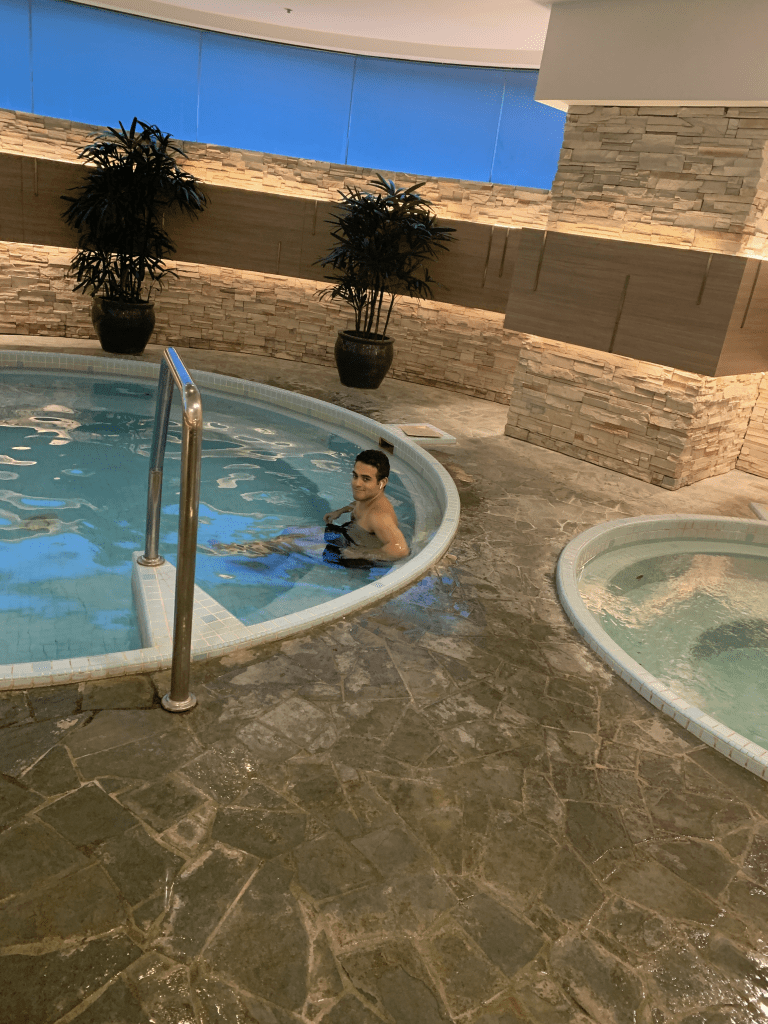
The travel day was long and had many stops. Some of these stops included multiple checkpoints for immigration and customs. Once through, we found ourselves traveling over a beautiful bridge allowing view of the water separating Singapore and Malaysia. Many boats occupied the water seemingly for business and pleasure. This area was neither Singapore nor Malaysia and, as we understood it, was a sort of ‘No Mans Land’. Later on in our travels we stopped at a food and store outlet which allowed many us a much needed opportunity to eat and use the restroom. Here we would first experience the lack of infrastructure for digital payments that is all over Malaysia. We were unable to use credit or debit cards and there was no ATM on scene to allow for cash withdrawal. Some were wise enough to have exchanged currency prior, while others were less fortunate and had to wait. Another noteworthy part of the outlet was the restrooms. There were prayer rooms right before the entrances where we found many shoes at the door and people on their knees in prayer. We found this to be fascinating and a genuine reflection of the strong ties Malaysia holds with religion. The bathrooms themselves were also interesting, having the toilets be lowered all the way to the floor with no toilet paper offered. This was a shock and not Ideal for anybody. Following this we continues our journey finally arriving at the Shangri-La Hotel in Kuala Lumpur. The hotels lobby was magnificent and undoubtedly the most sizable that we had experiences thus far. After meeting in the lobby for laundry load for the group, we enjoyed the wonderful hotel amenities including the pool, hot tub, sauna, steam room, ice bath, spa, and gym.

Around this time it began to pour with thunder & lightning accompanying. This self treatment was highly enjoyable after the long day of travel and combined with the weather was likely the leading influence in our evening plans.

These plans included resting, hydrating, and falling asleep early to brace for the wild times that would undoubtedly be ahead of us. It was a good and rejuvenating two nights in.

Design a site like this with WordPress.com
Get started